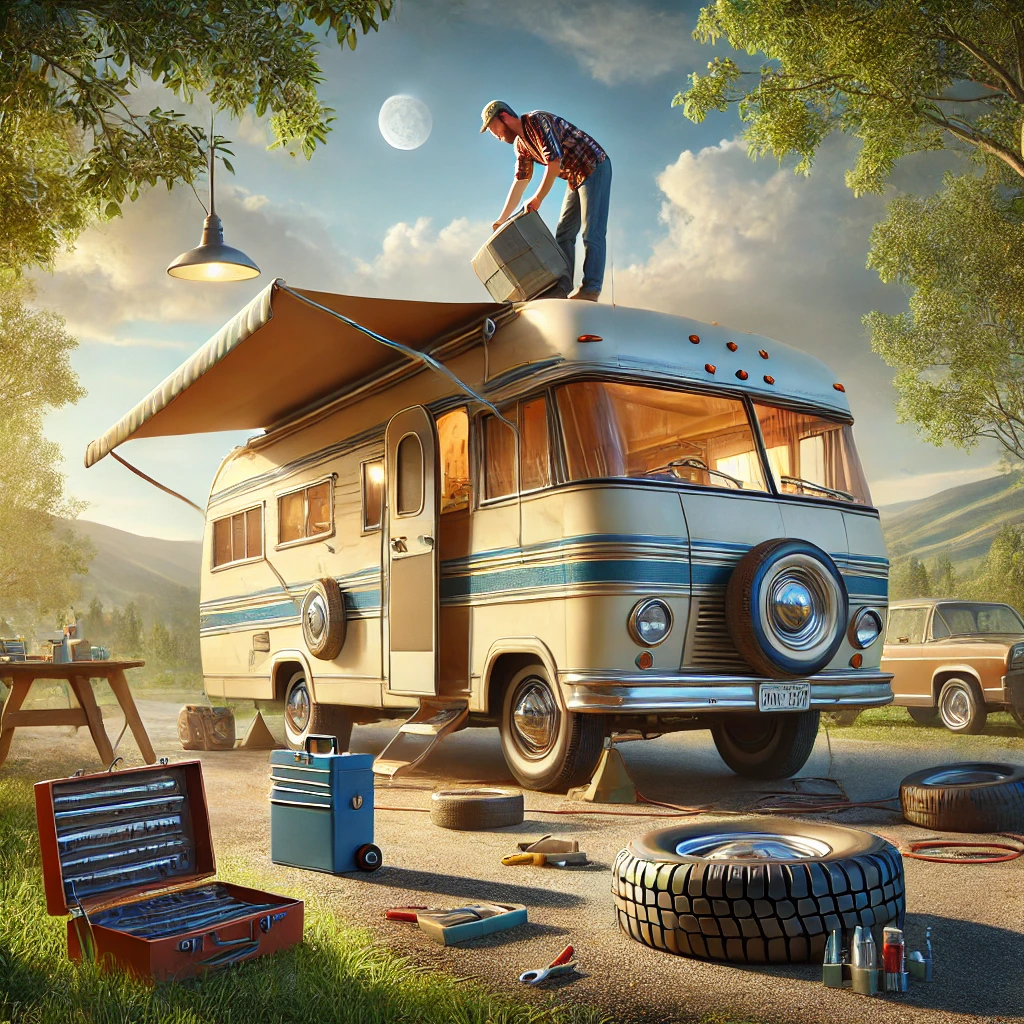
Keep Your Vintage Rig Running Smoothly for Years to Come!
Owning an older RV—whether it’s a vintage Airstream, a classic Winnebago, or a beloved 90s motorhome—is like owning a piece of history. But with that charm comes extra maintenance and care to keep your rig safe, functional, and road-ready.
Older RVs require more attention than newer models, but with proper maintenance, they can last decades longer and even become more valuable over time. Here’s how to keep your classic camper in top shape so you can enjoy many more adventures on the road. 🚐✨
🚧 1. Inspect the Roof Regularly (Leaks Are the Enemy!)
Why It’s Important:
🔹 Older RVs are prone to leaks, and roof damage can destroy your interior.
🔹 A small crack or missing sealant can lead to water damage, mold, and rot.
How to Maintain It:
✔ Inspect the roof every 3-6 months for cracks, soft spots, or peeling sealant.
✔ Re-seal seams and edges with RV-safe sealant or self-leveling lap sealant.
✔ Check vent covers, skylights, and AC units for leaks.
✔ Keep the roof clean to prevent grime buildup and UV damage.
🌟 Pro Tip: If your RV has a rubber roof, apply UV protectant to prevent it from drying out and cracking.
🛞 2. Take Care of the Tires (They Age Faster Than You Think!)
Why It’s Important:
🔹 Even if your tires look fine, RV tires age out before they wear out.
🔹 Dry rot and cracking can cause dangerous blowouts on the road.
How to Maintain Them:
✔ Replace tires every 5-7 years, even if they have good tread.
✔ Check tire pressure before every trip (underinflated tires wear out faster).
✔ Inspect for cracks or bulges in the sidewalls.
✔ Store your RV on tire blocks to prevent flat spots.
✔ Use tire covers to protect from sun damage.
🌟 Pro Tip: Look at the DOT date code on your tires—it tells you when they were manufactured!
🔧 3. Maintain the Engine & Drivetrain (For Motorhomes Only)
Why It’s Important:
🔹 An older engine needs regular oil changes and tune-ups to run smoothly.
🔹 Fluids degrade over time, leading to breakdowns and overheating.
How to Maintain It:
✔ Change the oil and filters every 3,000-5,000 miles.
✔ Flush and replace coolant, transmission fluid, and brake fluid as needed.
✔ Check belts, hoses, and fuel lines for cracks or leaks.
✔ Start the engine and drive the RV regularly to keep fluids circulating.
✔ Keep an eye on the battery—replace it every 3-5 years.
🌟 Pro Tip: Let your RV idle for a few minutes before driving if it’s been sitting for a while.
⚡ 4. Keep the Electrical System in Check
Why It’s Important:
🔹 Older RVs often have worn-out wiring, faulty outlets, or outdated fuse panels.
🔹 Electrical issues can cause power failures or even fires.
How to Maintain It:
✔ Check and replace old fuses & circuit breakers.
✔ Test all outlets and lights—replace any flickering or dead bulbs.
✔ Inspect battery connections for corrosion and clean them as needed.
✔ Upgrade old electrical panels if they’re outdated.
✔ Use a surge protector to prevent power damage at campgrounds.
🌟 Pro Tip: If your RV still has old-school incandescent bulbs, switch to LEDs to save power and reduce heat.
💦 5. Prevent Water Damage in the Plumbing System
Why It’s Important:
🔹 Water leaks can cause mold, mildew, and structural damage in older RVs.
🔹 Older pipes and fittings can crack over time.
How to Maintain It:
✔ Check all plumbing connections for leaks or drips.
✔ Inspect water lines for cracks or swelling (especially in cold weather).
✔ Drain the water system before winter to prevent freezing.
✔ Replace the water pump if it’s weak or noisy.
✔ Sanitize the fresh water tank every few months to prevent odors.
🌟 Pro Tip: Use RV antifreeze in winter if you’re storing your rig in cold temperatures.
🔥 6. Keep Your RV Appliances Running Smoothly
Why It’s Important:
🔹 Older RV appliances (fridge, stove, heater, AC) can fail if not maintained.
🔹 RV refrigerators need proper ventilation to work efficiently.
How to Maintain Them:
✔ Clean the fridge vents & burner area to prevent dust buildup.
✔ Test the water heater & furnace before every season.
✔ Inspect propane connections for leaks with soapy water.
✔ Vacuum AC filters & clean the coils for better cooling.
✔ Check the stove burners for clogs or weak flames.
🌟 Pro Tip: If your RV fridge isn’t staying cold, check if it’s level—it won’t work properly if tilted!
🛠️ 7. Upgrade What You Can (Without Losing That Vintage Charm!)
Why It’s Important:
🔹 Some parts of older RVs need modern upgrades for safety and comfort.
🔹 Small upgrades can improve efficiency, comfort, and resale value.
Easy Upgrades for Classic RVs:
✔ Install LED lights to reduce power draw.
✔ Upgrade to a modern thermostat for better temperature control.
✔ Replace old foam cushions & mattresses for better sleep.
✔ Add solar panels for off-grid power.
✔ Swap out worn-out flooring for durable vinyl plank.
🌟 Pro Tip: Keep the original vintage aesthetic while upgrading behind the scenes!
🚀 Final Thoughts: Keeping Your Classic RV Road-Ready
Owning an older RV is rewarding, but it comes with extra maintenance. With regular inspections, smart upgrades, and proper care, your classic camper can keep rolling for many more adventures!
✔ Check the roof & plumbing for leaks regularly.
✔ Maintain tires, brakes, and engine components.
✔ Keep the electrical system safe & updated.
✔ Clean and maintain appliances for efficiency.
✔ Upgrade where needed, but keep the vintage charm!
🚐✨ Do you own a classic RV? Share your favorite maintenance tips in the comments!