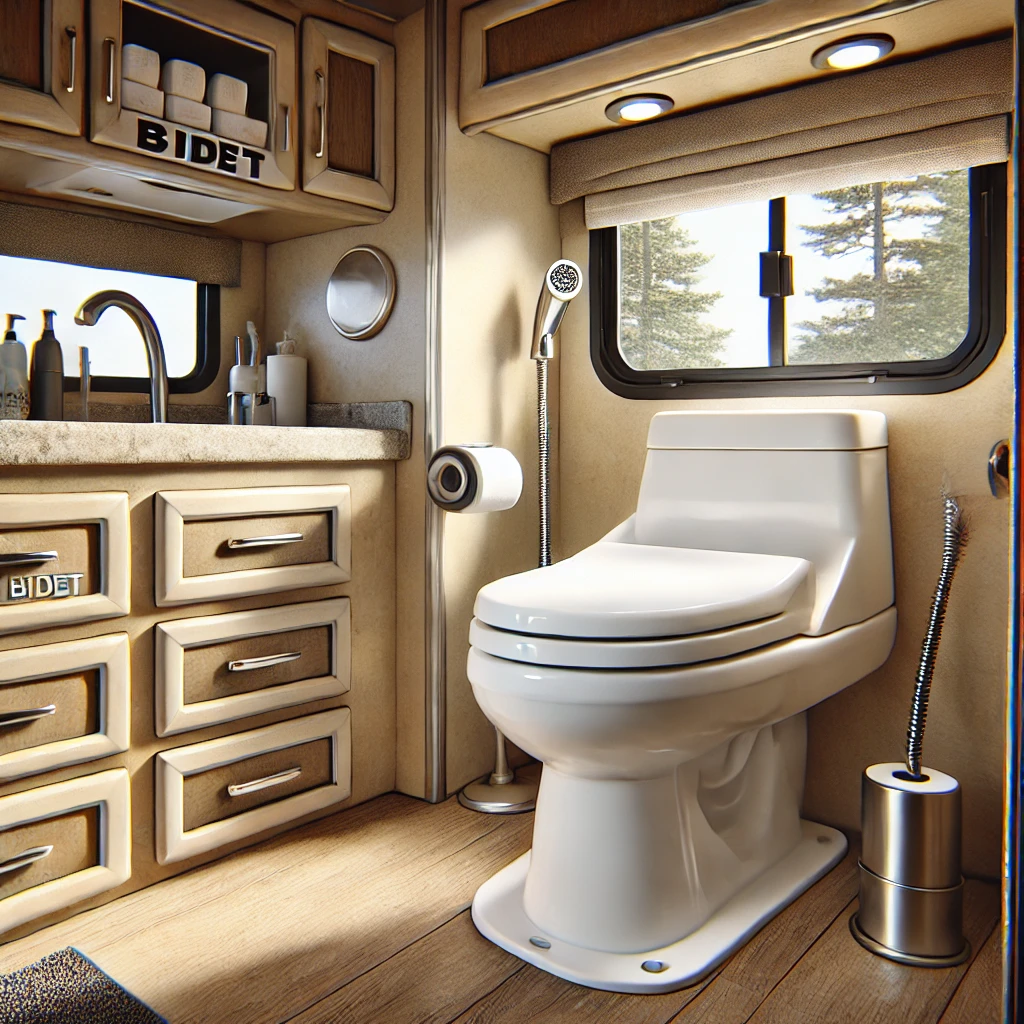
When it comes to RV bathrooms, most campers just deal with the standard RV toilet—until they realize there’s a cleaner, more comfortable alternative: a bidet.
Bidets have gained popularity in the RV community for their ability to reduce toilet paper use, improve hygiene, and make life on the road more comfortable. But is a bidet actually better for RV life, or should you stick with a traditional RV toilet?
Let’s break down the pros, cons, and key differences so you can decide which one is right for your setup! 🚐💧
🚽 1. What’s the Difference?
🔹 Traditional RV Toilet (The Standard Setup)
A standard RV toilet is water-efficient and connects to a black tank. Some models use foot pedals for flushing, while others are cassette or composting toilets with different waste systems.
✔ Uses water from your fresh tank (or campground hookup).
✔ Waste goes into your black tank for later dumping.
✔ Relies on toilet paper and tank treatments to prevent clogs and odors.
🔹 RV Bidet (The Cleaner Upgrade)
A bidet attaches to your existing RV toilet or replaces it completely. It sprays water for cleaning instead of relying on toilet paper.
✔ Uses less toilet paper, meaning fewer clogs.
✔ Some bidets connect to hot and cold water for added comfort.
✔ Available in handheld sprayers, seat attachments, or full bidet toilet seats.
🌟 Pro Tip: Most RV bidets are non-electric, making them easy to install and compatible with RV plumbing!
💦 2. The Pros & Cons of Each Option
✅ The Benefits of a Bidet in Your RV
✔ Uses Less Toilet Paper – Reduces the risk of clogging your black tank.
✔ Better Hygiene – Water cleans more effectively than TP alone.
✔ Eco-Friendly – Cuts down on waste and paper consumption.
✔ Saves Space – No need to store bulky toilet paper rolls.
✔ Great for Boondocking – Uses minimal water while keeping you clean.
❌ The Downsides of an RV Bidet
❌ Uses More Water – Even a small sprayer adds to your water usage.
❌ Not Ideal for Dry Camping – If you’re saving water, a bidet may be less practical.
❌ Learning Curve – If you’re new to bidets, there’s a slight adjustment period.
✅ The Benefits of a Traditional RV Toilet
✔ Low Water Usage – RV toilets use minimal water per flush.
✔ Works Anywhere – No modifications needed for dry camping or boondocking.
✔ Simple & Reliable – No extra components to install or maintain.
❌ The Downsides of a Traditional RV Toilet
❌ Requires More Toilet Paper – Can cause clogs and extra waste in your black tank.
❌ Not as Hygienic – Toilet paper doesn’t clean as thoroughly as water.
❌ Odor Management Needed – Requires tank treatments and regular flushing.
🌟 Pro Tip: Even if you keep a traditional RV toilet, using RV-safe toilet paper helps avoid clogs and black tank issues!
🚿 3. How Much Water Does a Bidet Use in an RV?
One of the biggest concerns for RVers is water consumption. Here’s how bidet vs. traditional flushing compares:
💧 Bidet Water Usage: ~0.1 to 0.5 gallons per use
💧 Traditional RV Toilet Flush: ~0.5 to 1 gallon per flush
Since bidets use less water per use, but RV toilets require flushing afterward, the difference is minimal. However, if you’re dry camping or have limited water, a bidet may not be ideal for every trip.
🌟 Pro Tip: Some bidets have adjustable pressure to help conserve water!
🛠️ 4. Installing a Bidet in Your RV
Can You Install a Bidet in an RV?
Yes! Many handheld sprayers and bidet seat attachments are compatible with RV toilets.
🔧 How to Install an RV Bidet (Step-by-Step)
1️⃣ Turn Off the Water Supply – Shut off the RV’s water pump or city water.
2️⃣ Disconnect the Toilet’s Water Line – Unscrew the hose where water enters the toilet.
3️⃣ Attach a T-Valve Adapter – Connect the bidet to the water line.
4️⃣ Secure the Bidet Nozzle – Mount the handheld sprayer or bidet seat.
5️⃣ Turn Water Back On & Test It – Adjust pressure and check for leaks.
🌟 Pro Tip: Most RV bidets connect directly to the cold water line, but some models allow for hot water hookups if you want a warmer spray!
🚽 5. Which One is Right for You?
🚐 Choose a Traditional RV Toilet If:
✔ You boondock often and need to conserve water.
✔ You prefer low-maintenance solutions.
✔ You’re fine using RV-safe toilet paper.
💦 Choose a Bidet If:
✔ You want better hygiene and less toilet paper use.
✔ You camp in places with plenty of water hookups.
✔ You don’t mind a small plumbing modification for added comfort.
🌟 Pro Tip: If you boondock part-time, you can install a bidet but only use it when hooked up to full water & sewer!
🚀 Final Thoughts: Is a Bidet Worth It for Your RV?
For many RVers, switching to a bidet is a game-changer—reducing toilet paper waste, improving hygiene, and making RV life more comfortable. But for dry campers and boondockers, the extra water usage might not be worth it.
💡 Quick Recap: RV Bidet vs. Traditional Toilet
✔ Bidet: Uses less TP, cleaner experience, but requires water.
✔ Traditional RV Toilet: Saves water, no modifications, but requires more TP & maintenance.
✔ Best Option? If you’re a full-time or hooked-up camper, a bidet can be a great upgrade!
🚐 Would you install a bidet in your RV? Let us know in the comments!