It’s one of the most common questions in RV forums and campgrounds:
“Do I really need a dually to tow my rig?”
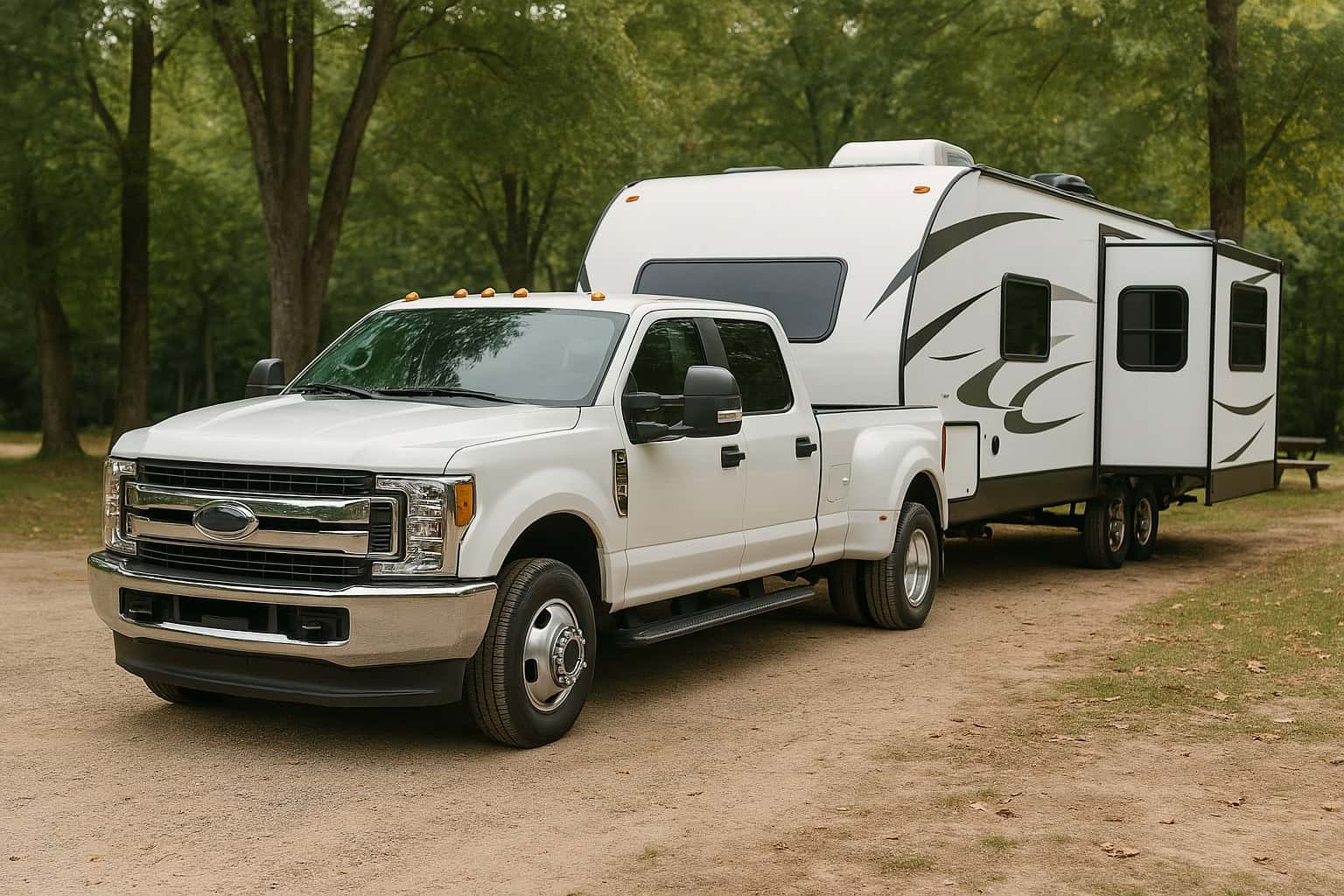
If you’ve been shopping for trucks—or watching them rumble through campgrounds—you’ve probably noticed those beefy dual-rear-wheel setups (aka “duallies”) hauling big fifth wheels.
But is all that extra muscle necessary? Or are you just burning more diesel and squeezing into fewer parking spaces?
Let’s break it down in plain English.
🚛 What Is a Dually, Anyway?
A dually (or DRW = Dual Rear Wheel) truck has two wheels on each side of the rear axle—four total in the back.
This setup gives the truck:
-
More stability when towing heavy loads
-
A wider footprint to spread out weight
-
Higher payload capacity for heavier trailers
It’s made for serious towing.
🎯 When You Probably Do Need a Dually
-
You’re Towing a Heavy Fifth Wheel or Toy Hauler
If your trailer is 16,000–20,000+ lbs loaded, a dually gives you the control and capacity you need—especially in wind or mountains. -
You Travel Long Distances Often
Duallies provide a smoother ride, better sway resistance, and more peace of mind when you’re logging highway miles regularly. -
You Plan to Full-Time
If this is your home-on-wheels, and it’s a big one, the added durability and safety are worth it.
🧾 When a Single Rear Wheel (SRW) Might Be Enough
-
You Have a Smaller Fifth Wheel or Travel Trailer
If your trailer is under ~14,000 lbs loaded, a ¾-ton SRW truck might be just fine (check your numbers!). -
You Want a Daily Driver Too
Duallies are wide. Really wide. Think drive-thrus, tight campgrounds, and small-town streets. -
You Don’t Want to Deal With 6 Tires
More tires = more maintenance. SRW trucks are simpler and cheaper to maintain.
🛠️ Don’t Forget the Payload!
It’s not just about towing capacity.
Payload (what your truck can carry in the bed) matters just as much—especially with a fifth wheel, which adds weight directly over the rear axle.
Duallies can carry more in the bed without squatting or straining.
✅ Final Thoughts
You don’t always need a dually—but when you do, you’ll be glad you have it.
Here’s the rule of thumb:
-
Big rig? Go dually.
-
Mid-size rig + daily driver? SRW is probably fine.
Just make sure you check your actual trailer’s GVWR (max weight loaded) and compare it to your truck’s payload and towing specs. Numbers matter more than brand loyalty or Instagram photos.
Because at the end of the day?
It’s not about showing off your truck.
It’s about getting there safely—with your RV, your gear, and your sanity intact. 🛻🔧🏕️