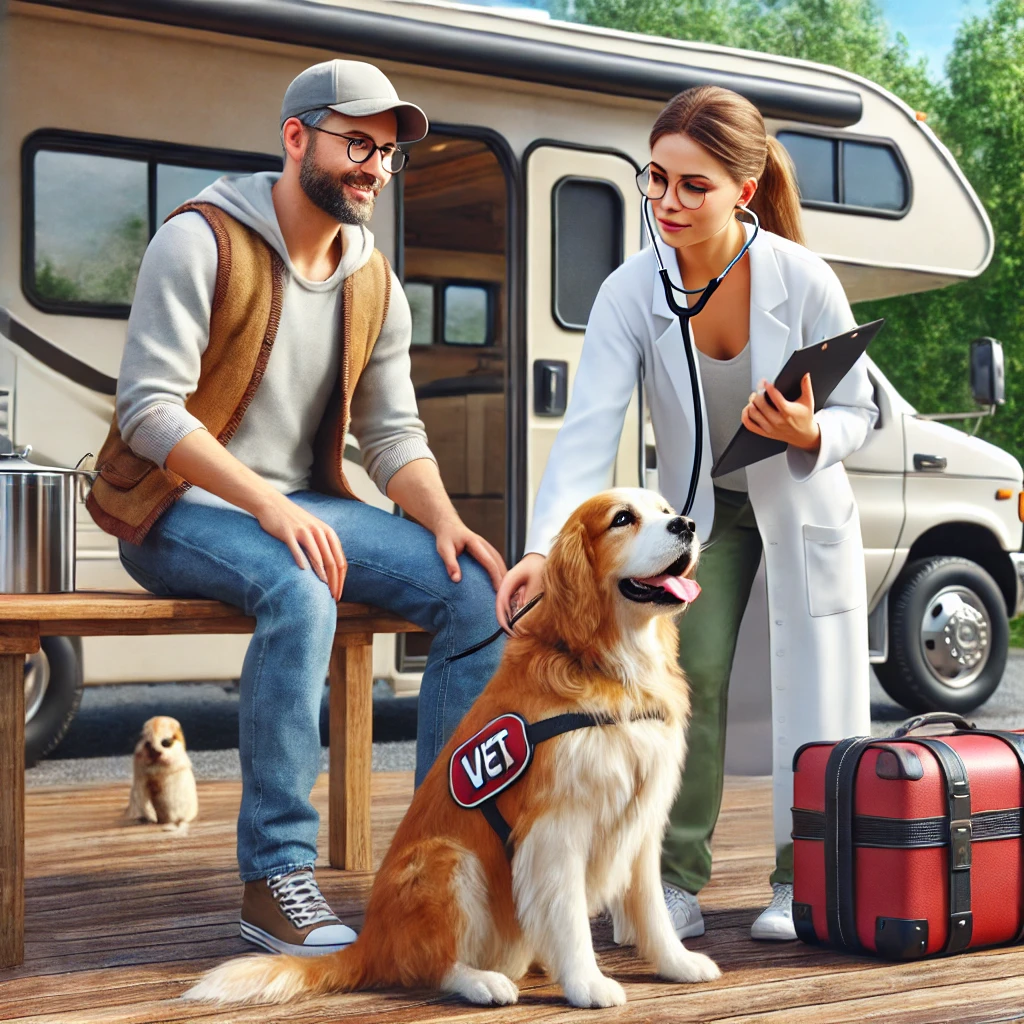
You’ve mapped out the perfect RV route, stocked up on pet treats, and made sure your furry companion has a cozy spot in your rig. But what if your pet gets sick or injured while you're miles away from home?
For RVers traveling with pets, unexpected medical needs can be stressful—especially if you're in a remote area with no familiar vet nearby. Knowing where to go, what to do, and how to prepare can make all the difference in getting your pet the care they need without unnecessary panic.
Here’s how to find a vet on the road, handle pet emergencies, and travel with peace of mind.
1. Plan Ahead: Vet Prep Before Your Trip
Before hitting the road, make a pet health plan. This will help prevent last-minute panic if something goes wrong.
✅ Things to Do Before You Travel:
✔ Research vets along your route – Find clinics in the towns or states you’ll visit.
✔ Get a copy of your pet’s medical records – Keep vaccination records, prescriptions, and past medical history on hand.
✔ Locate 24-hour emergency vets – Not all vet clinics handle after-hours emergencies.
✔ Stock up on pet meds and supplies – Make sure you have enough flea/tick prevention, heartworm meds, and any prescriptions for your trip.
✔ Update microchip information – If your pet gets lost, your contact info needs to be current.
2. How to Find a Vet on the Road
If you need a vet while traveling, speed and accuracy matter. Here’s how to find one fast:
🔎 Best Ways to Find a Vet Near You:
✅ Google Maps – Search “veterinarian near me” or “emergency vet near me.”
✅ Vet Locator Websites & Apps:
- VetLocator.com – Find vets by location and specialty.
- AAHA.org – Accredited animal hospitals in the U.S.
- PetFriendlyTravel.com – Lists pet-friendly services, including vets.
✅ Call Local Pet Stores or Shelters – They often recommend trusted vets in the area.
✅ Ask Your Campground Host – Many RV parks have pet-friendly resources and vet referrals.
✅ Check Social Media Groups – Facebook groups like RVing with Pets often have real-time recommendations.
💡 Pro Tip: Save the names, addresses, and phone numbers of at least two vets per state before your trip.
3. Emergency vs. Routine Vet Visits: Knowing When to Go
Not every pet issue requires an immediate vet visit. Knowing when to seek urgent care can save you time, money, and stress.
🚨 Signs Your Pet Needs Emergency Care:
⚠ Difficulty breathing or excessive panting
⚠ Vomiting or diarrhea for more than 24 hours
⚠ Seizures or collapse
⚠ Excessive bleeding or injury
⚠ Sudden lethargy or unresponsiveness
⚠ Difficulty urinating or defecating
🩺 Signs It Can Wait for a Routine Visit:
✔ Minor limping that improves within a day
✔ Mild upset stomach without other symptoms
✔ Small cuts that stop bleeding quickly
✔ Seasonal allergies or mild skin irritation
4. Pet First Aid Kit: Be Ready for Small Emergencies
Having a pet first aid kit can buy you time in an emergency, especially if you’re far from a vet.
🏥 What to Pack in Your Pet First Aid Kit:
✔ Gauze & bandages – For wounds and injuries
✔ Antiseptic wipes & antibiotic ointment – Prevents infections
✔ Tweezers & tick remover – For splinters, burrs, and parasites
✔ Activated charcoal – Helps in case of accidental poisoning (call a vet first!)
✔ Digital thermometer – A fever over 103°F requires vet attention
✔ Benadryl (diphenhydramine) – Safe for dogs (1mg per pound) in case of mild allergic reactions
✔ Hydrogen peroxide – Can induce vomiting (ONLY under vet guidance)
💡 Pro Tip: Keep your pet first aid kit in an easy-to-access spot in your RV or tow vehicle.
5. Pet Insurance & Emergency Costs: What to Expect
Vet bills can add up fast, especially for emergency care. Knowing your options for payment and pet insurance can help reduce stress when unexpected issues arise.
Pet Insurance vs. Emergency Funds
✔ Pet Insurance: Covers accidents, illnesses, and some preventative care (depending on the plan).
✔ Emergency Savings: Set aside $500-$1,500 in case of urgent vet visits.
💰 Average Cost of Common Vet Emergencies:
🐶 Broken bone – $1,500-$3,500
🐶 Bloat (gastric torsion) – $2,500-$7,500
🐶 Snakebite – $500-$2,000
🐶 Poisoning – $300-$1,000
🐶 Ear infection – $100-$300
6. RV Pet Safety Tips: Preventing Vet Emergencies
Preventing problems is always better than dealing with an emergency.
🐾 Best Practices for Pet Safety on the Road:
✅ Never leave pets alone in a hot RV – Temperatures can rise 20°F in minutes!
✅ Keep pets secured while driving – Use seatbelt harnesses or crash-tested crates.
✅ Watch for toxic plants & critters – Many state parks have foxtails, snakes, and poisonous mushrooms.
✅ Avoid unfamiliar water sources – Lakes, rivers, and ponds may contain bacteria or algae dangerous to pets.
✅ Check leash laws & campground rules – Some places have strict pet policies.
Final Thoughts: Be Prepared, Stay Safe, and Enjoy the Journey
RVing with pets is one of the best ways to travel, but being proactive about their health and safety is essential.
By planning ahead, knowing where to find a vet, carrying a first aid kit, and recognizing emergency signs, you can relax and enjoy the road with your furry friend by your side.
Safe travels—and happy tails!