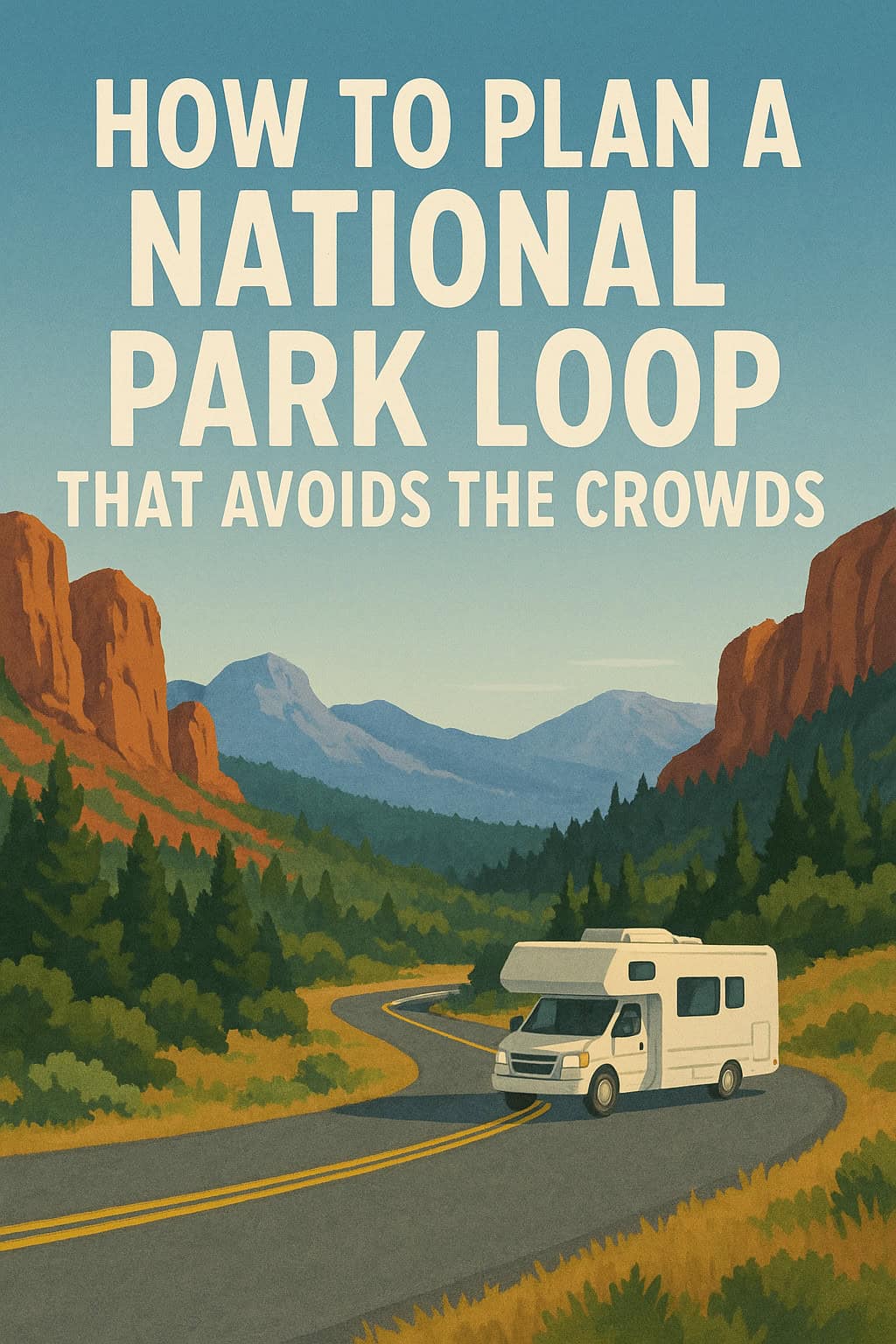
Visiting national parks is one of the best parts of RV life. Mountains, canyons, wildlife, and fresh air—what’s not to love?
But sometimes the parks can get too crowded. Parking lots fill up. Trails feel packed. Campgrounds book up months ahead. That can take the fun out of the trip.
The good news? You can visit national parks without the crowds—if you plan smart. One great way is to make a loop trip with quiet stops along the way.
Let’s break down how to build your own peaceful national park loop!
🧭 What’s a National Park Loop?
A loop trip is when you start in one place, travel a full circle (visiting different parks), and return to your starting spot. It’s great for:
-
RVers
-
Road trippers
-
Anyone who wants to explore without backtracking
Instead of hitting the same crowded parks everyone else does, you plan a route that includes:
-
Less-traveled parks
-
Quiet back roads
-
State parks and forests nearby
📅 Step 1: Choose the Right Time
To avoid crowds, don’t travel during peak season (summer holidays and school breaks). Try:
-
Spring (April–May)
-
Fall (September–October)
-
Mid-week travel (Tuesday–Thursday)
-
Early mornings and late afternoons at the parks
Some parks are magical in shoulder season—less heat, fewer bugs, and fewer people.
🌍 Step 2: Pick Your Region
Instead of racing across the country, focus on one area. Here are some great regional loop ideas:
🏔️ Southwest Loop
-
Petrified Forest (AZ)
-
Canyonlands (UT)
-
Capitol Reef (UT)
-
Great Basin (NV – very quiet!)
-
Optional: Arches or Zion (go early or off-season)
🌲 Northwest Loop
-
North Cascades (WA – less crowded)
-
Mount Rainier (WA)
-
Crater Lake (OR)
-
Redwood National & State Parks (CA)
🏞️ Southern Loop
-
Congaree (SC – underrated & peaceful)
-
Great Smoky Mountains (TN/NC – go in fall, mid-week)
-
Mammoth Cave (KY)
-
Optional: Blue Ridge Parkway for a scenic drive
🏕️ Step 3: Find Nearby Alternatives
Big parks get busy, but nearby state parks and national forests are often quiet and just as beautiful.
Examples:
-
Skip Grand Canyon South Rim → Try North Rim or nearby Kaibab National Forest
-
Yosemite packed? Stay in Sierra National Forest and hike outside the valley
-
Rocky Mountain crowded? Camp near State Forest State Park or Nederland, CO
🚐 Step 4: Plan Smart RV Stops
Use your loop to:
-
Stay 2–4 nights at each stop
-
Mix boondocking, state parks, and RV parks
-
Plan stops within 2–4 hours of driving
-
Use apps or maps to check road grades and RV-friendly routes
Don’t overdo it! A peaceful loop should feel fun—not rushed.
💡 Step 5: Be Flexible
Sometimes:
-
The best campsite is the second one you find
-
The best trail is the one no one’s talking about
-
The best day is when you change the plan and go slow
Build in time for changes, detours, and rest days. You’re not just seeing parks—you’re living in them.
📋 Extra Tips to Avoid Crowds
-
Arrive at trailheads before 9 a.m.
-
Bring lunch so you don’t need to leave and re-enter
-
Visit lesser-known spots in the park (ask a ranger!)
-
Stay for sunset or golden hour when others are leaving
-
Bike or hike into areas where cars can’t go
Final Thoughts
National parks are amazing—but they’re even better when you have space to enjoy them. With a smart loop plan, off-peak timing, and a calm pace, you can explore America's beauty without the chaos.
So grab a map, circle a region, and start building your own quiet, scenic adventure.