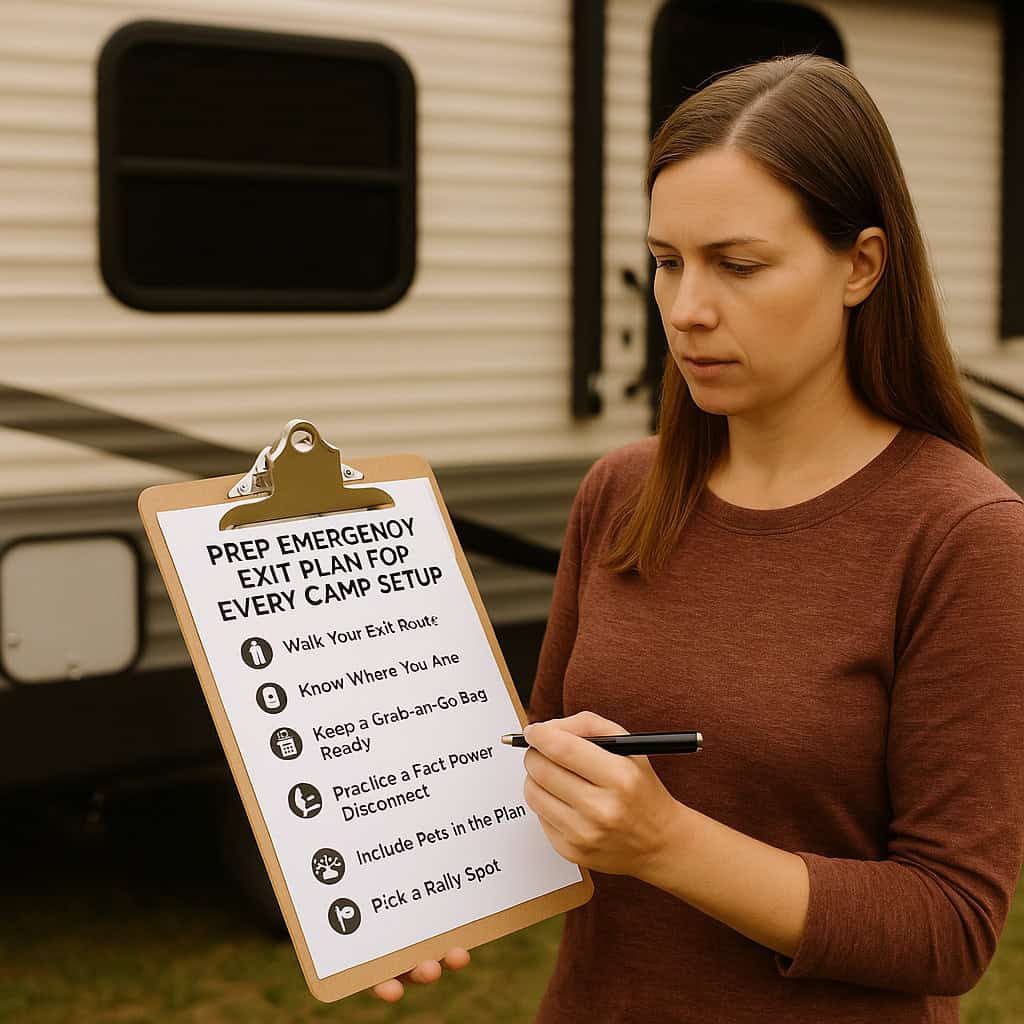
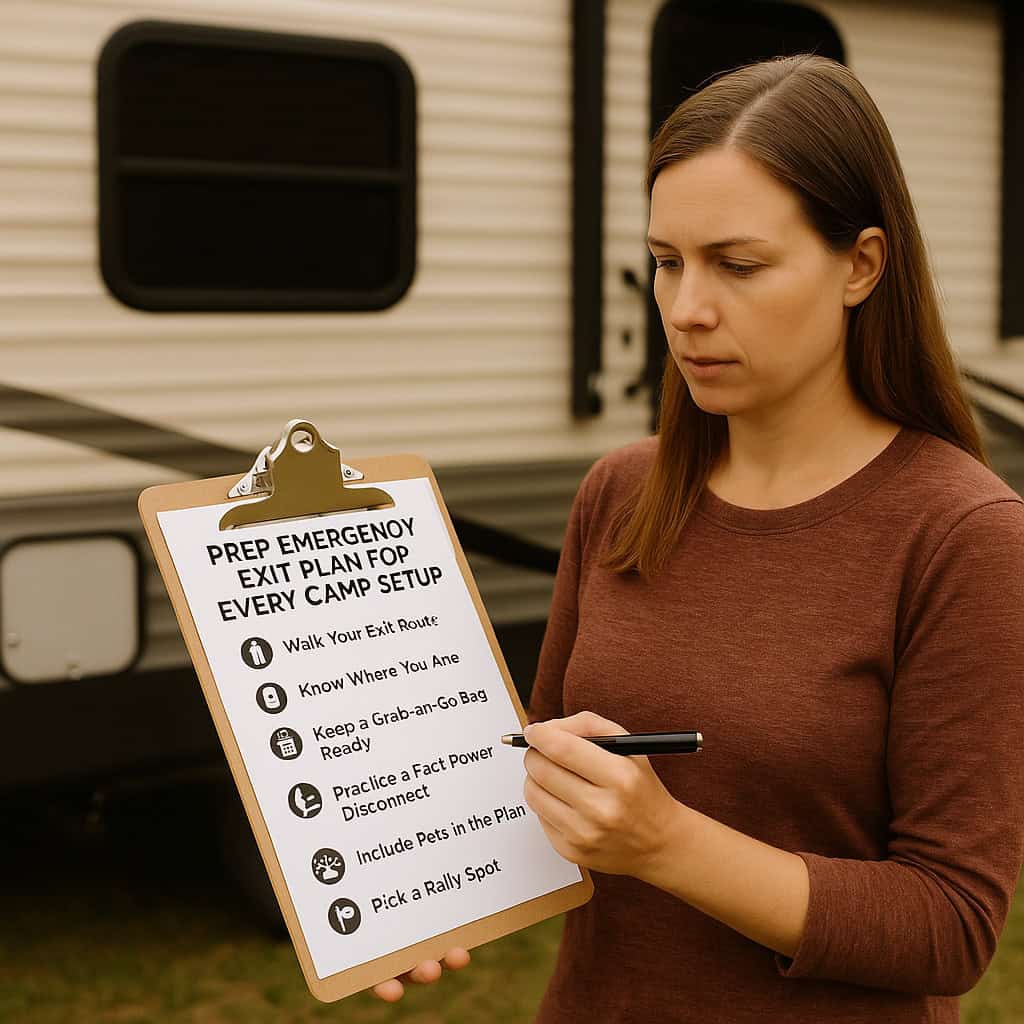
RVing is about fun, freedom, and fresh air—but it’s also about being prepared.
What would you do if there were a fire nearby? A storm rolled in fast? Or someone in your crew had a medical emergency?
That’s where an emergency exit plan comes in. It’s a simple plan to help you leave quickly and safely if something goes wrong.
Let’s walk through how to set one up at every campground—so you’re always ready, just in case.
🚐 Why Every Site Needs a Plan
Campgrounds are all different. Some are wide open. Others are tight, hilly, or packed with trees and campers.
If an emergency happens, you may only have minutes to move. A good plan helps you:
-
Leave without panic
-
Protect your family, pets, and gear
-
Avoid blocked roads or confusion
-
Stay calm and focused when it matters most
✅ Step 1: Walk Your Exit Route
When you park your RV:
-
Look at all roads in and out of the campground
-
Spot any one-way roads, low branches, or tight turns
-
Know which direction to pull out (especially with a trailer)
-
If towing, know how to quickly unhook if needed
This helps you avoid surprises when every second counts.
📍 Step 2: Know Where You Are
Sounds silly, but if you have to call 911, you need to know:
-
The name of the campground
-
The address or closest road
-
Your site number
Keep this info:
-
On your RV dashboard
-
On a sticky note by the door
-
Saved in your phone
🧯 Step 3: Keep a Grab-and-Go Bag Ready
Have one bag with:
-
Flashlight or headlamp
-
Phone charger
-
First-aid kit
-
Copies of ID and insurance
-
Cash or cards
-
Water bottle
-
Snacks
-
Meds or pet supplies
Keep it by the door or near the bed—ready to grab fast.
🔌 Step 4: Practice a Fast Power Disconnect
In an emergency, you may need to:
-
Unplug your RV
-
Turn off propane
-
Pull in slides and awning
-
Raise jacks or stabilizers
Practice these steps (or write them down) so you don’t forget anything when you’re in a hurry.
🐾 Step 5: Include Pets in the Plan
-
Keep leashes or carriers near the exit
-
Have pet food and meds in your grab bag
-
Practice loading them quickly if needed
-
Add a sticker or sign on your window to alert rescuers about pets inside
🧭 Step 6: Pick a Rally Spot
If you’re with family or friends:
-
Choose a meeting spot away from the RV (like a sign or tree)
-
Make sure everyone knows to go there if separated
-
Teach kids and guests what to do—practice it
📋 Step 7: Review the Plan Often
Every time you set up a new camp:
-
Take 2 minutes to review the exit route
-
Update your rally spot and site number
-
Make sure everyone knows where the grab bag is
Quick, simple steps—but they make a big difference.
Final Thoughts
Emergencies are rare—but being prepared makes you stronger, calmer, and safer.
With a little planning, you can enjoy every campground knowing you’ve got a way out if needed.
Because camping should feel good, not scary. And the best way to enjoy the outdoors? Be smart before the storm.