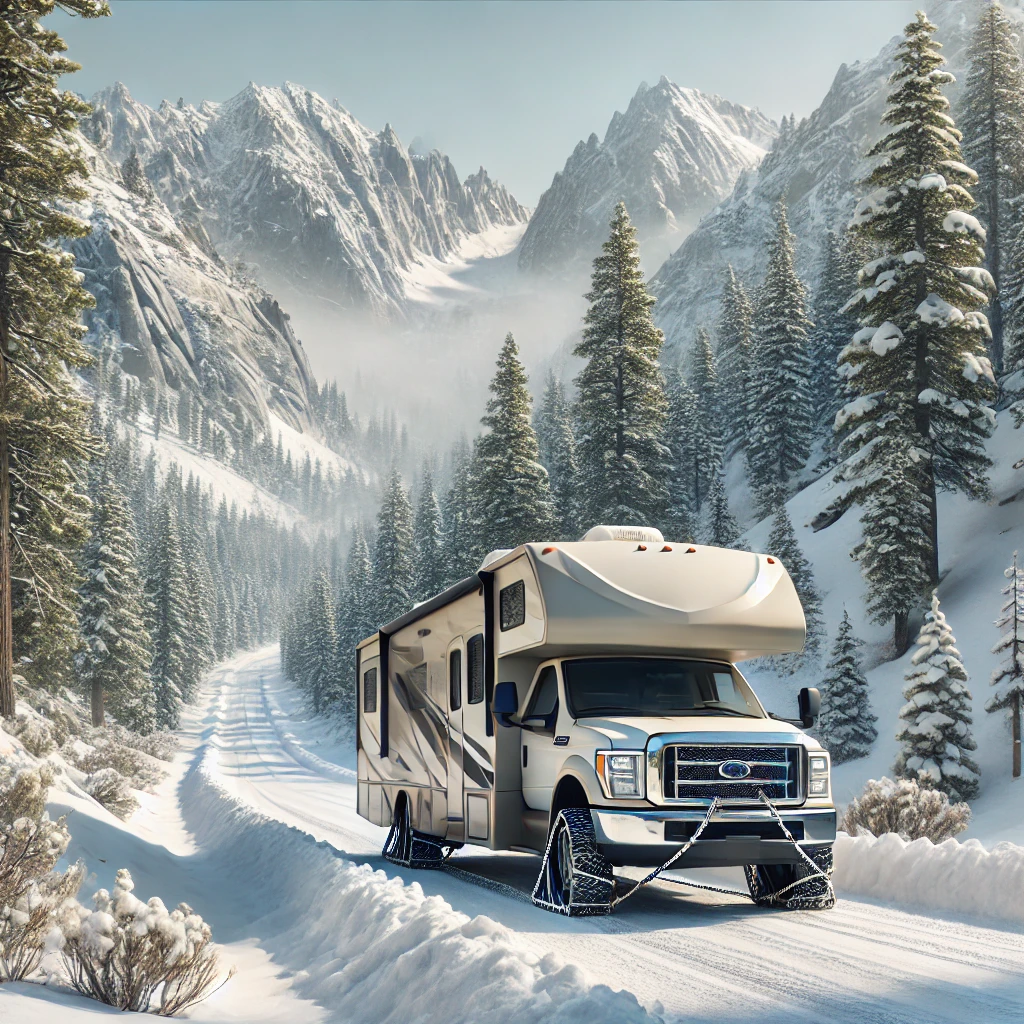
The Sierra Nevada mountains are a breathtaking destination, but they can also present some of the most challenging driving conditions for RVers. Whether you’re traveling to Lake Tahoe, Yosemite, or Mammoth Lakes, winter RVing in the Sierras requires careful preparation, the right gear, and smart driving techniques.
If you're planning to tackle snowy mountain roads, here’s how to stay safe, keep warm, and avoid getting stuck.
❄️ 1. Know Before You Go: Check Weather & Road Conditions
Sierra roads can change from clear to treacherous in minutes. Always check for:
✅ Weather Forecasts – Use NOAA, Weather.gov, or a weather app for updates.
✅ Road Conditions – Check Caltrans QuickMap or call 511 for chain requirements.
✅ Wind Warnings – Strong gusts in mountain passes can make RV driving dangerous.
✅ Avalanche & Closure Alerts – Some Sierra routes close in winter due to heavy snow or rockslides.
💡 Pro Tip: If a winter storm is incoming, delay your trip or reroute—even 4WD won’t help in extreme conditions!
🛠️ 2. Essential Gear for Winter RVing
Packing the right equipment can keep you safe and your RV running smoothly in freezing temperatures.
🔹 Must-Have Winter Driving Gear
✔️ Snow Chains or Auto Socks – Legally required on many Sierra roads.
✔️ Tire Pressure Gauge & Air Compressor – Cold weather reduces tire pressure.
✔️ Windshield De-Icer & Ice Scraper – Prevents dangerous ice buildup.
✔️ Collapsible Shovel & Traction Mats – Helps if you get stuck in snow.
✔️ Extra Fuel & Propane – Winter conditions increase fuel consumption.
🔹 RV Winterization Gear
✔️ Heated Water Hose – Prevents freezing pipes.
✔️ Tank Heaters – Keeps black/gray water from freezing.
✔️ RV Skirting – Reduces undercarriage heat loss.
✔️ Space Heaters & Extra Blankets – Backup heat in case of furnace failure.
💡 Pro Tip: Keep non-perishable food, a flashlight, and an emergency radio in case of unexpected delays.
🚐 3. Adjust Your RV Driving Techniques for Snow & Ice
Driving a large, heavy RV on snowy roads is very different from regular highway driving. Here’s how to stay safe:
🔹 Before You Start Driving:
✅ Clear all snow & ice from your RV roof, mirrors, and windows.
✅ Warm up your engine for at least 10 minutes before departure.
✅ Engage low gears (if applicable) for better control on downhill slopes.
🔹 On the Road:
✔️ Drive Slow & Smooth – Sudden movements can cause skidding.
✔️ Increase Following Distance – Keep at least 5-6 seconds behind other vehicles.
✔️ Avoid Using Cruise Control – It reduces traction on slippery roads.
✔️ Brake Gently – Slamming brakes can cause your RV to skid.
✔️ Watch for Black Ice – Especially on bridges, shaded areas, and curves.
💡 Pro Tip: If you feel your RV losing traction, don’t panic! Ease off the gas and steer in the direction you want to go.
🛑 4. Know the Chain Control Rules for the Sierra Nevada
Many Sierra mountain passes require tire chains during winter storms. California uses a three-tier chain control system:
✔️ R1 – Chains required for all vehicles over 6,000 lbs.
✔️ R2 – Chains required unless you have 4WD with snow tires.
✔️ R3 – Chains required on ALL vehicles, including 4WD (rare).
💡 Pro Tip: Practice installing chains before your trip. You don’t want to be struggling in freezing temperatures!
🏕️ 5. Safe Winter Camping in the Sierras
Once you arrive at your campsite, follow these tips to stay warm and avoid winter damage:
🛠️ Setting Up in Snow:
✔️ Park Facing the Sun – Helps melt ice & snow around your site.
✔️ Use Reflectix in Windows – Adds insulation to prevent heat loss.
✔️ Keep Snow Away from Your RV Furnace Vent – Prevents carbon monoxide buildup.
🔥 Managing Heat & Power:
✔️ Monitor Propane Levels – Cold weather increases propane usage.
✔️ Use Electric Heaters (If Possible) – Reduces propane consumption.
✔️ Run Your Generator Regularly – Prevents battery failure in cold temps.
💡 Pro Tip: In extreme cold, leave cabinets open to let warm air circulate around pipes and prevent freezing.
🚧 6. Know When to Stay Put
Sometimes, the best decision is to wait out a storm. If conditions get too dangerous to drive:
✔️ Find a Safe Rest Stop – Avoid steep inclines or avalanche-prone areas.
✔️ Keep Your RV Running Every Few Hours – Prevents freezing fuel lines.
✔️ Listen to Weather Updates – Be ready to adjust your route.
💡 Pro Tip: If parked in deep snow, clear the area around your exhaust pipe to prevent carbon monoxide poisoning.
🏁 Final Thoughts: Stay Safe & Enjoy the Snowy Adventure!
RVing in the Sierra Nevada during winter is a beautiful but challenging experience. With the right preparation, winter gear, and smart driving techniques, you can safely navigate snowy roads and enjoy the magic of a winter RV trip!
🚐 Have you RVed in snowy mountain conditions? Drop a comment and share your best winter driving tips!