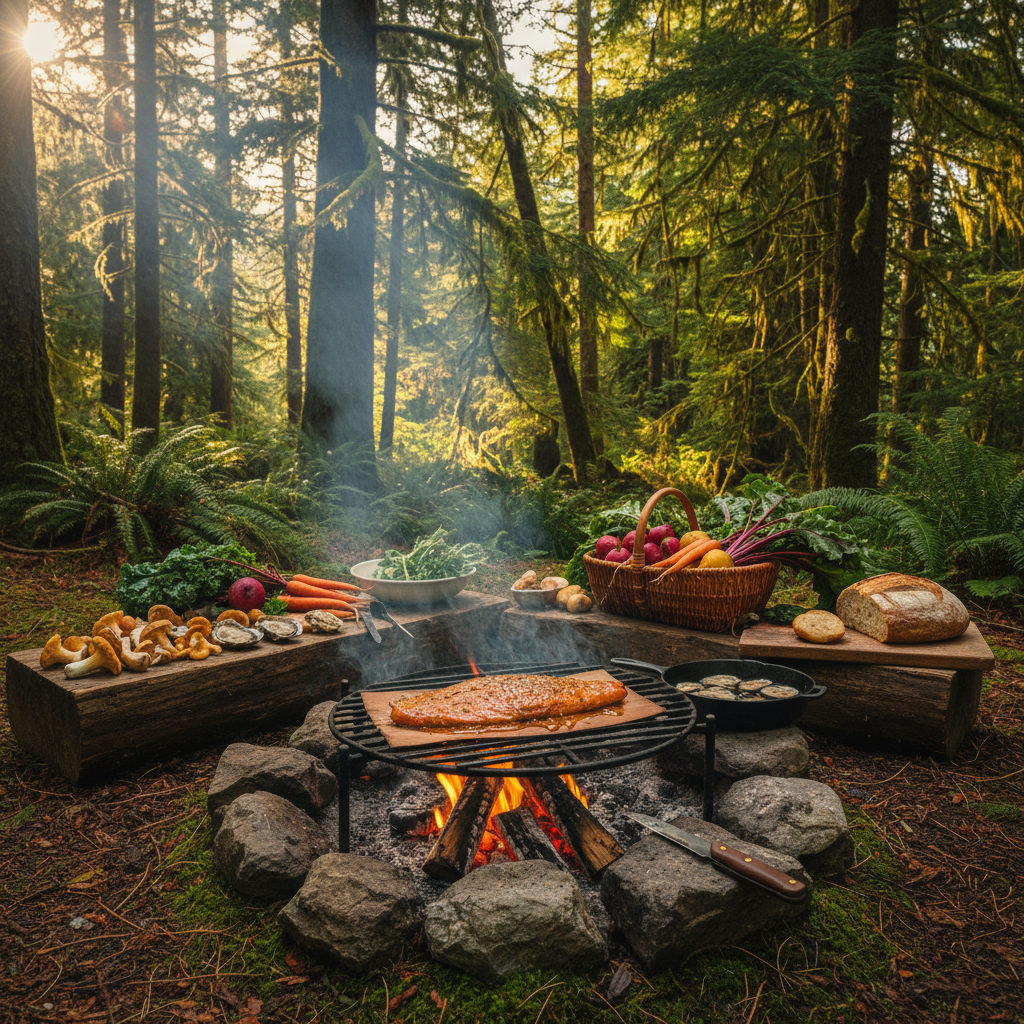
Why the Pacific Northwest Is a Food Lover's Camping Paradise
There's something almost unfair about camping in the Pacific Northwest. The scenery is jaw-dropping, the forests are ancient and cathedral-like, and — here's the part that doesn't get nearly enough attention — the local ingredients are extraordinary. From Dungeness crab pulled fresh from the Puget Sound to wild huckleberries growing right along the trail, the PNW hands campers a culinary advantage that few other regions can match. Whether you're parked at a full-hookup RV resort near the Olympic Peninsula or roughing it under a Douglas fir canopy, your camp kitchen deserves to rise to the occasion.
Start at the Source: Stocking Up Before You Roll In
The secret weapon of any Pacific Northwest camping cook is shopping local before setting up camp. Make a habit of stopping at farmers markets, roadside stands, and coastal fish docks on your way to your site. Here's what to look for depending on the season:
- Spring & Summer: Walla Walla sweet onions, Rainier cherries, fresh Dungeness crab, and Pacific salmon
- Fall: Chanterelle and porcini mushrooms, Honeycrisp apples, pears, and hazelnuts
- Year-Round: Smoked salmon, local oysters (many bays offer self-harvest), and artisan cheeses from small-batch creameries
Before you finalize your campsite, browse CampgroundViews.com to explore RV parks and campgrounds near these local food hubs. Our virtual tours let you scout not just the site itself but the surrounding area — so you can plan your foodie pit stops with confidence.
Three Campfire Recipes Built for the Pacific Northwest
1. Cedar-Planked Salmon with Lemon-Dill Butter
If you're camping anywhere near the Columbia River, Puget Sound, or the Oregon Coast, fresh Pacific salmon is practically a moral obligation. Soak a cedar plank in water for at least an hour, then lay a salmon fillet skin-side down. Mix softened butter with fresh dill, minced garlic, and lemon zest, then spread it generously over the fish. Place the plank over medium campfire coals or on your RV grill and cook for 15–20 minutes until the flesh flakes easily. The cedar smoke infuses the salmon with a woodsy depth that no restaurant can replicate — especially when enjoyed with a Cascade Mountain view as your backdrop.
2. Foil-Pack Chanterelle and Potato Hash
Fall camping in the PNW without a mushroom dish is a missed opportunity. Chanterelles are golden, buttery, and found at nearly every farmers market from Bellingham to Bend. Cube some Yukon Gold potatoes, toss with sliced chanterelles, diced shallots, fresh thyme, olive oil, salt, and pepper. Seal tightly in a heavy-duty foil packet and place directly on hot coals for 25–30 minutes, turning once halfway through. Crack it open and finish with a handful of shredded Gruyère for a dish that feels far fancier than its five ingredients suggest.
3. Campfire Oyster Roast
Oregon and Washington coastal campgrounds often sit within driving distance of working oyster bays. Grab a dozen fresh, live oysters, scrub them clean, and place them flat-side up directly on your campfire grate. In just 5–7 minutes, they'll pop open slightly — that's your cue. Shuck them carefully, top with a drop of hot sauce, a squeeze of lemon, or a tiny knob of compound butter, and enjoy them right there on the shell. It's interactive, impressive, and absolutely delicious.
Tips for Cooking Big in a Small RV Kitchen
- Use a single cast iron skillet for everything — it transitions seamlessly from stovetop to campfire grate
- Pre-mix dry spice blends at home to save space and prep time at the site
- Bring a collapsible cooler bag specifically for fresh, local finds you pick up en route
- A small wooden cutting board doubles as a serving platter for that Instagram-worthy moment
Find Your Perfect PNW Culinary Base Camp
The right campground can make or break your Pacific Northwest foodie adventure. Use CampgroundViews.com to explore over 28,000 campgrounds — complete with virtual tours so you can see exactly what you're booking before you arrive. Filter by hookups, proximity to water, and amenities to find the perfect home base for your next edible adventure. The forests are waiting, and so is dinner.