If you're shopping for a truck to tow your RV—or trying to figure out if your current setup is safe—you're bound to run into three confusing terms:
-
Payload
-
Tongue weight
-
Towing capacity
They sound technical, but they’re actually pretty simple. Let’s break it down in real talk, so you can hit the road with confidence (and no blown suspension).
📦 1. Payload
What it means:
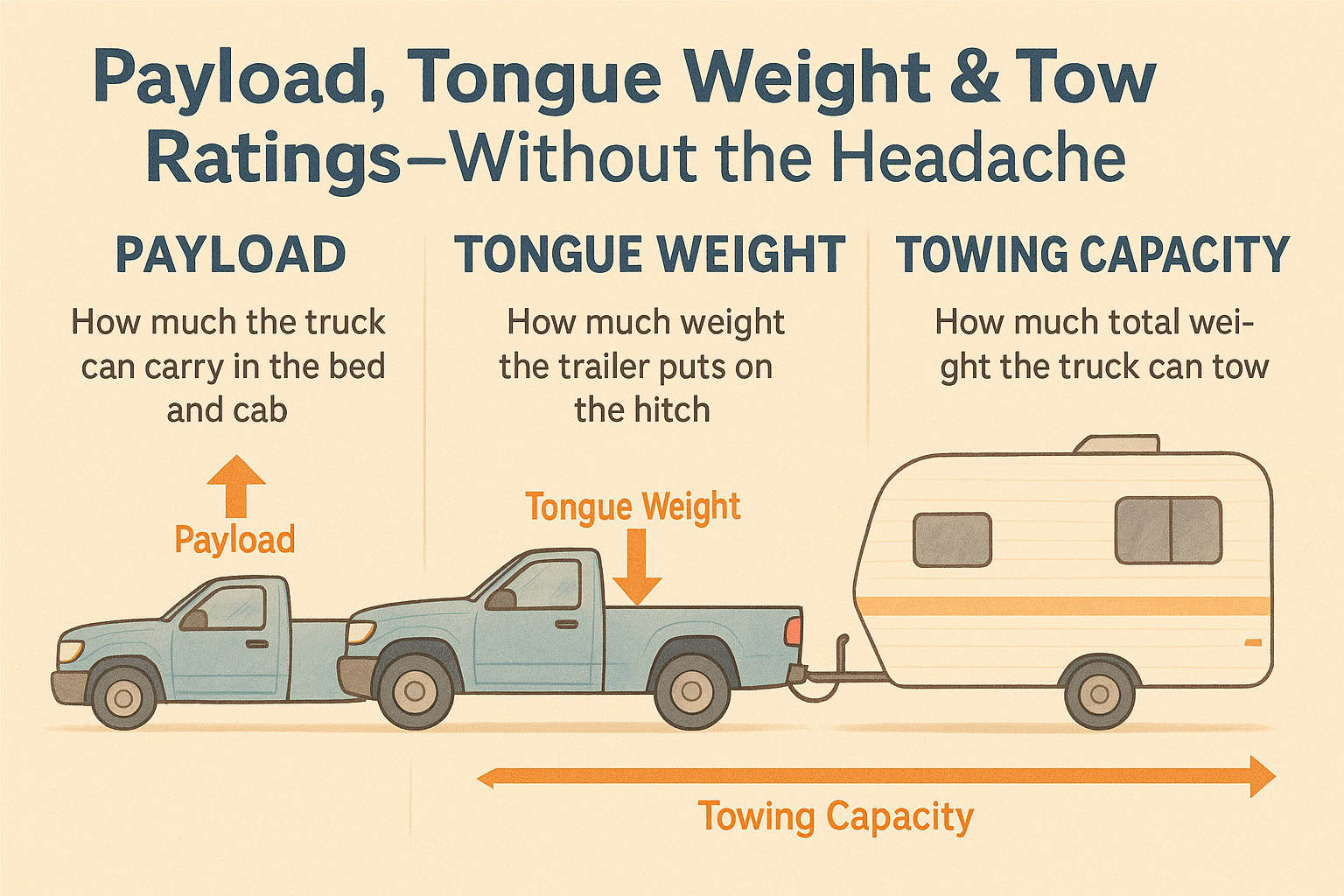
The total weight your truck can carry in the bed and cab. That includes:
-
People
-
Gear
-
Tools
-
Tongue weight from the trailer hitch
Why it matters:
Too much payload = saggy suspension, unsafe handling, and stress on your frame.
Where to find it:
Look inside the driver’s door. There’s usually a sticker with the GVWR (Gross Vehicle Weight Rating). Subtract the truck’s curb weight, and you’ve got payload.
🎯 2. Tongue Weight
What it means:
The amount of weight the trailer puts directly on the truck’s hitch.
Rule of thumb:
-
About 10–15% of the trailer’s total weight
-
So a 5,000 lb trailer = 500–750 lbs of tongue weight
Why it matters:
Tongue weight eats up your payload. If your truck can carry 1,500 lbs and the tongue weight is 700, you’ve only got 800 lbs left for people and gear.
🚚 3. Towing Capacity
What it means:
How much total weight your truck can safely pull.
This includes:
-
The full weight of your trailer when loaded
-
Not just the “dry weight” from the brochure
Why it matters:
Going over your tow rating = engine strain, braking issues, and transmission damage.
🧠 Final Thoughts
Towing isn’t about pushing limits—it’s about staying under them.
Know these three numbers:
-
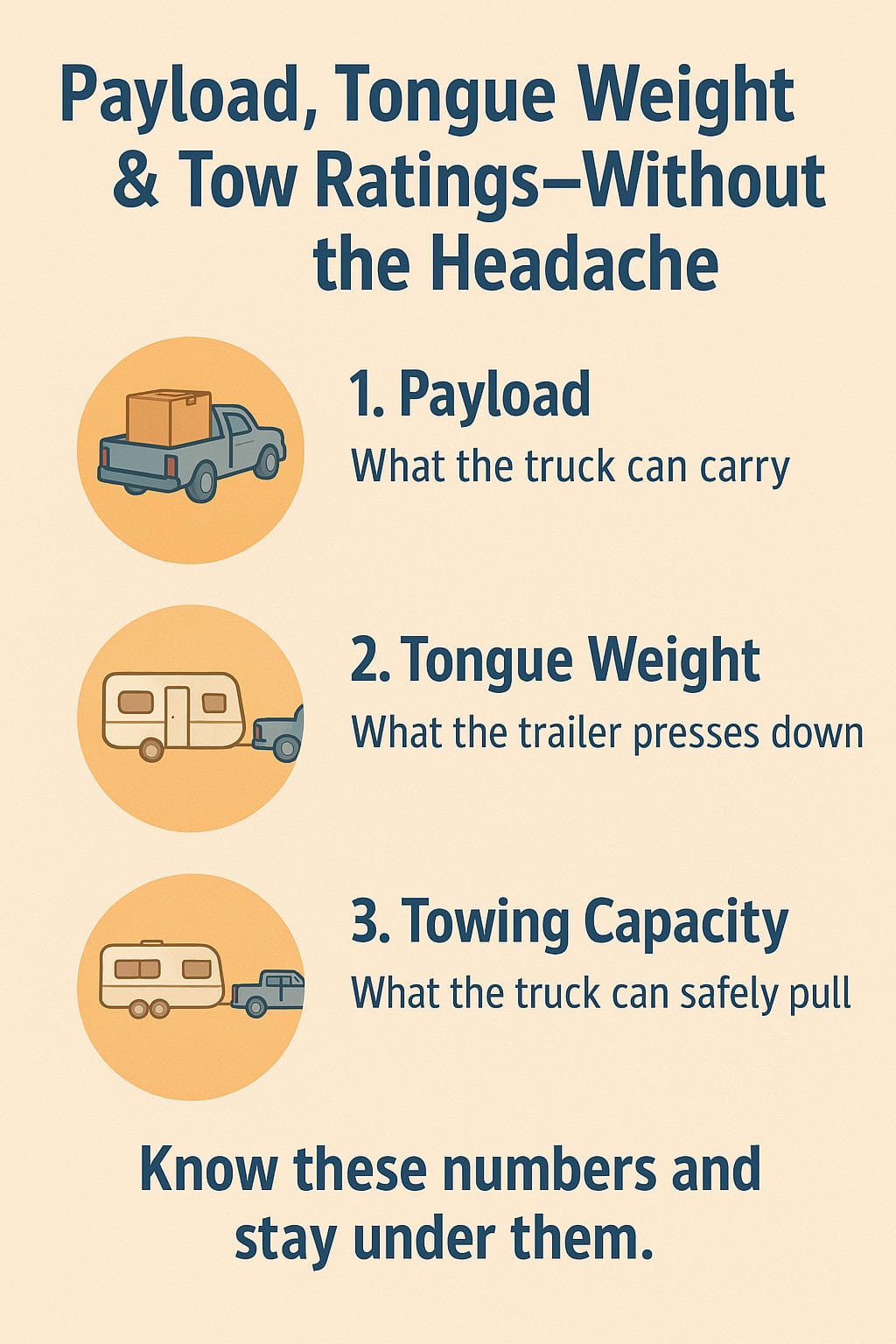
Payload = what the truck can carry
-
Tongue weight = what the trailer presses down
-
Tow rating = how much your truck can safely pull
Once you’ve got that dialed in, towing becomes a lot less stressful—and a lot more fun. 🛻📏🏕️