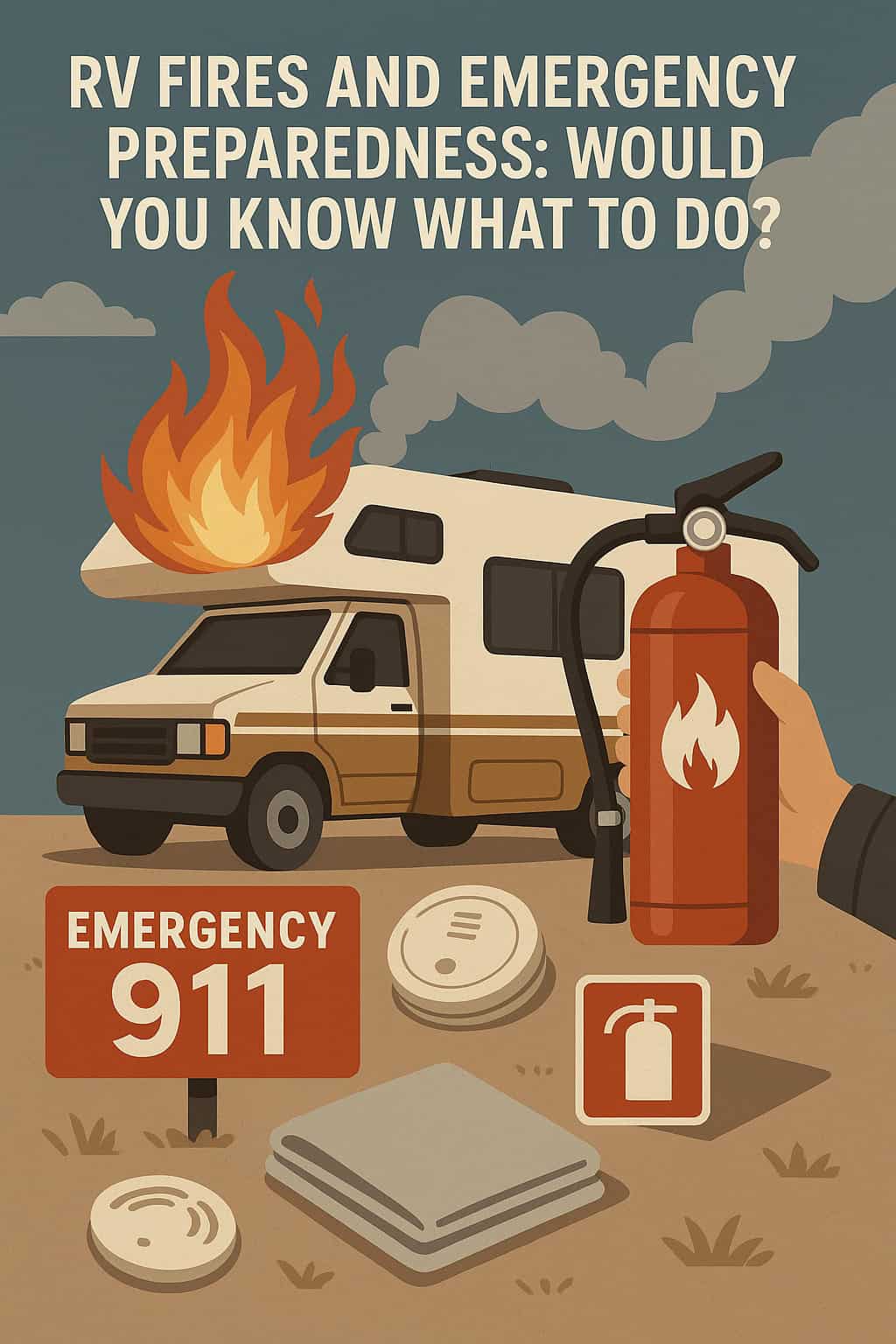
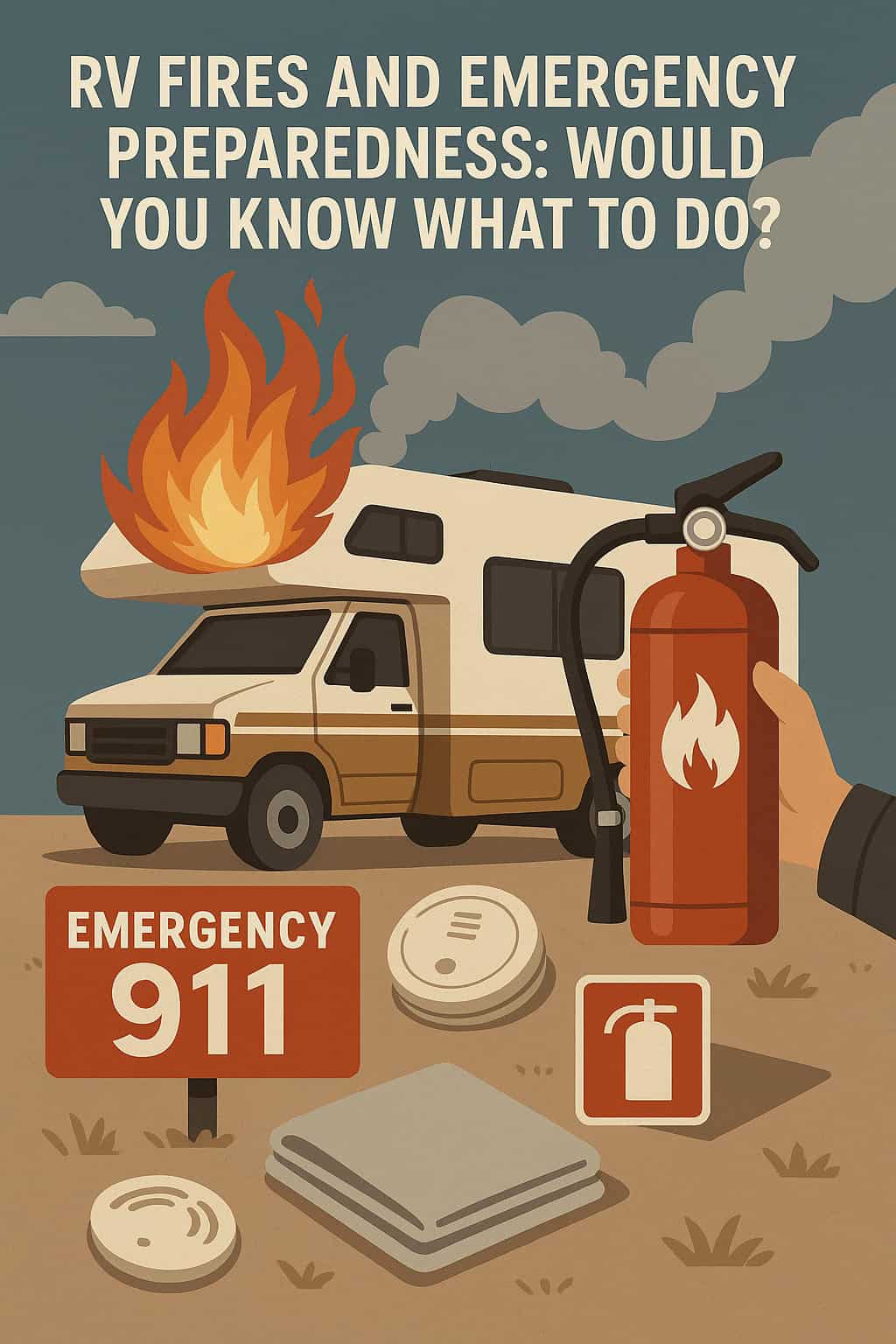
When you're camping in your RV, you expect peace and quiet—not danger. But just like any home, RVs can have emergencies, and one of the most serious is a fire.
Fires in RVs move fast. Your rig is small, made of flammable materials, and filled with things like propane and batteries. That’s why being prepared is so important.
Would you know what to do if a fire started in your RV? Let’s walk through it—step by step—so you feel confident and safe.
🔥 How RV Fires Start
Fires can happen in many ways, but these are the most common causes in RVs:
-
Propane leaks or malfunctions
-
Electrical problems or short circuits
-
Overheated appliances or space heaters
-
Kitchen fires (stove or oven)
-
Campfires set too close to the rig
-
Generator or engine fires
Many of these fires can start suddenly—and spread in seconds.
⏱️ Time Is Short in an RV Fire
Most RV fires become dangerous in under 1 minute. That’s why you need to:
-
Act fast
-
Get everyone out immediately
-
Call for help after you’re safe
Trying to save stuff can cost you time—and time matters.
🚨 7 Things Every Camper Should Know
1. Have a Fire Escape Plan
-
Know how to get out fast
-
Practice opening windows and doors in a rush
-
Make sure kids and guests know the plan too
2. Install (and Check!) Smoke and CO Detectors
-
Every RV should have working alarms
-
Test them every month
-
Replace batteries regularly
3. Keep a Fire Extinguisher Handy
-
Place one near the kitchen and the door
-
Know how to use it (Pull, Aim, Squeeze, Sweep – PASS!)
-
Check the gauge—make sure it’s not expired
4. Turn Off the Propane When Driving
-
It’s safer and lowers the risk of leaks during travel
5. Don’t Block Exits
-
Keep paths clear—no boxes, shoes, or gear in the way
-
Make sure emergency windows can open easily
6. Use Electrical Gear Safely
-
Don’t overload outlets or power strips
-
Only use RV-rated cords and chargers
7. Campfire Safety
-
Keep campfires far from the RV
-
Never leave a fire unattended
-
Fully soak and stir ashes before walking away
🧯 What to Do If a Fire Starts
Inside the RV:
-
Shout “FIRE!” so everyone knows
-
Get out immediately
-
Close the door behind you (if safe to do so)
-
Use the fire extinguisher only if the fire is very small
-
Call 911 or local emergency services
-
Stay out—never go back inside
Outside the RV:
-
Keep away from propane tanks and fuel sources
-
Move your vehicle or tow car if safe to do so
-
Let others nearby know there’s danger
🛠️ Emergency Gear Every RVer Should Carry
-
Smoke and CO detectors
-
Fire extinguishers (at least 1, ideally 2–3)
-
Fire blanket (for kitchen fires)
-
Escape tool or hammer for windows
-
Flashlight and whistle
-
Emergency contact info printed and stored inside
🐾 Don’t Forget Pets
-
Keep a leash or crate near the door
-
Practice quick exits with your pets
-
Have a sticker or sign noting pets inside your RV
Final Thoughts
RV fires are rare—but they do happen. Being prepared doesn’t mean being scared. It means you’re smart, ready, and protecting what matters most.
So before your next trip, take a few minutes to:
-
Test alarms
-
Practice your exit
-
Review the plan with your family
Because in an emergency, what you know can save your life.