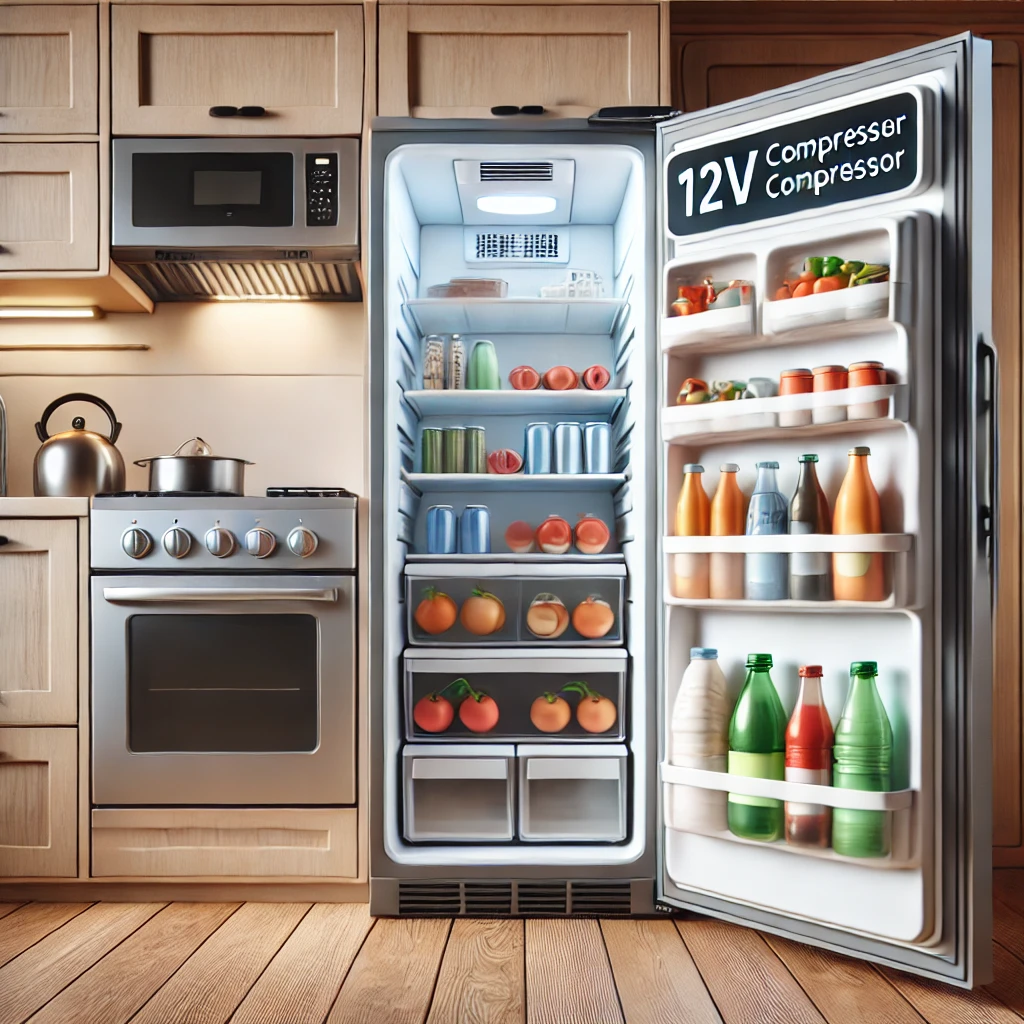
RV technology has come a long way, and 12-volt compressor refrigerators are becoming an increasingly popular choice among modern RVers. Unlike traditional absorption fridges, these newer models offer better cooling efficiency, faster performance, and can run directly off your RV's battery system.
But are they the right fit for your RV lifestyle? Let’s break down the pros and cons of 12V compressor refrigerators so you can decide if this upgrade is worth it.
🔋 What is a 12-Volt Compressor Refrigerator?
A 12V compressor fridge is a battery-powered refrigerator that works much like the standard fridge in your home. It uses a compressor to cool the interior quickly and efficiently, unlike absorption refrigerators, which require propane or electric power and take longer to cool down.
These fridges are designed to work with your RV’s 12V battery system, making them a great choice for boondocking, van life, and off-grid camping.
✅ The Pros of 12V Compressor Refrigerators
1. Faster & More Efficient Cooling ❄️
✅ 12V compressor refrigerators cool down much faster than absorption fridges.
✅ They maintain stable temperatures, even in hot weather.
✅ No need to park perfectly level like with absorption fridges.
💡 Great for: RVers who need reliable cooling in extreme temperatures.
2. Runs Directly Off Your RV Battery 🔋
✅ No propane needed—works entirely on 12V power.
✅ Compatible with solar setups, making them great for boondocking.
✅ Uses less energy than a traditional absorption fridge when paired with lithium batteries.
💡 Great for: Off-grid campers who rely on solar power and battery banks.
3. Safe to Use While Driving 🚐
✅ Unlike propane fridges, you don’t have to turn it off while driving.
✅ No risk of propane leaks or fire hazards while in motion.
✅ More freedom to stop anywhere without worrying about ventilation.
💡 Great for: Full-time travelers and road trippers who want peace of mind.
4. No Open Flame or Venting Required 🔥
✅ Absorption fridges require ventilation to prevent gas buildup.
✅ 12V compressor fridges don’t rely on propane, making them safer indoors.
✅ They can be installed anywhere in the RV, not just along exterior walls.
💡 Great for: RVers who want more flexibility in fridge placement.
❌ The Cons of 12V Compressor Refrigerators
1. Higher Upfront Cost 💰
❌ 12V compressor fridges are more expensive than propane models.
❌ Expect to pay $800–$2,500, depending on size and features.
❌ Some RVs may require battery or solar upgrades to run them efficiently.
💡 Solution: If you boondock often, a solar panel setup can offset the power cost.
2. Uses More Battery Power ⚡
❌ 12V fridges draw power continuously compared to propane models.
❌ If you camp without solar or shore power, it can drain your battery quickly.
❌ May require a second battery or lithium upgrade for extended off-grid use.
💡 Solution: Pair it with a large battery bank and solar panels for reliable power.
3. Smaller Storage Capacity in Some Models 🥶
❌ Some 12V compressor fridges have less storage space than traditional RV fridges.
❌ Large absorption fridges (8+ cubic feet) still have more room for food storage.
❌ Freezer space may be limited on some models.
💡 Solution: If you need extra storage, consider a portable 12V fridge/freezer unit.
🔄 Comparing 12V Compressor vs. Absorption Refrigerators
| Feature | 12V Compressor Fridge | Absorption Fridge |
|---|---|---|
| Cooling Speed | Fast | Slow |
| Power Source | Battery/Solar | Propane/Electric |
| Works While Driving? | Yes | No (unless on inverter) |
| Energy Efficiency | Battery-dependent | Propane lasts longer off-grid |
| Installation Flexibility | Anywhere | Requires exterior venting |
| Safety | No open flame | Requires ventilation for propane |
| Cost | Higher upfront | Lower upfront |
| Best For | Full-time travelers, off-grid camping | Occasional campers, propane users |
🏕️ Should You Upgrade to a 12V Compressor Fridge?
A 12V compressor fridge is a game-changer for RVers who:
✅ Want faster cooling and consistent performance in all temperatures.
✅ Prefer to avoid propane and fire risks.
✅ Travel off-grid or boondock frequently.
✅ Have a solar power setup or extra battery capacity.
However, if you mostly stay at full-hookup campgrounds or rely on propane for off-grid camping, a traditional absorption fridge may still be the better choice.
🚐 What’s your fridge setup? Do you use a 12V compressor model or prefer propane? Drop a comment and let us know!