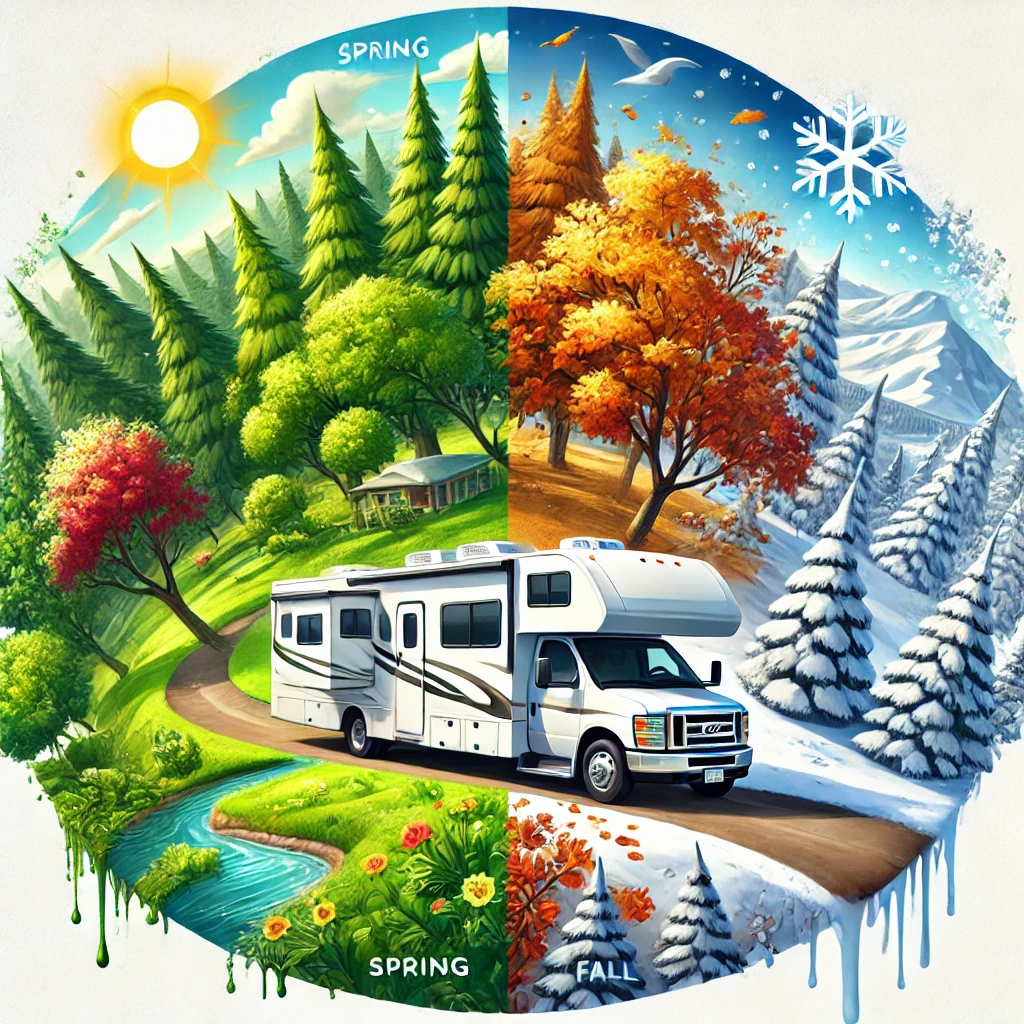
Fuel costs can be one of the biggest expenses for RV owners, but did you know that
seasonal changes can impact your fuel efficiency? Whether you’re driving in the
heat of summer or
navigating winter roads, understanding how weather and seasonal conditions affect your RV can help you
improve mileage and save money at the pump.
In this guide, we’ll break down
seasonal driving tips to help you get the most out of every gallon, no matter the time of year!
How Seasons Affect Your RV's Fuel Economy
🌞
Summer: Hot weather can increase
tire pressure and air conditioning usage, leading to
higher fuel consumption.
🍂
Fall: Cooler temperatures and
strong winds can create more
drag, forcing your engine to work harder.
❄️
Winter: Cold weather
reduces tire pressure, thickens engine fluids, and
lowers fuel efficiency—especially during warm-up periods.
🌷
Spring: Rainy conditions and
muddy roads can add
rolling resistance, requiring more power to move your RV.
💡
Pro Tip: Understanding these seasonal changes
helps you adjust your driving habits and maintenance routine to maximize fuel efficiency year-round!
Spring & Summer Driving Tips for Better Fuel Efficiency
1. Keep Your Tires at the Right Pressure 🚐💨
Heat causes
tire pressure to increase, while colder mornings
reduce pressure. Underinflated tires increase
rolling resistance, making your RV burn more fuel.
✔
Check tire pressure before every trip (use a digital tire gauge).
✔ Follow the
recommended PSI from your RV manual.
✔ Use
nitrogen-filled tires to reduce pressure fluctuations.
💡
Pro Tip: Overinflated tires wear unevenly and reduce traction, so don’t overdo it!
2. Limit A/C Usage & Use Ventilation Instead 🌬️
Your RV's
air conditioning system is a major fuel consumer, especially in
hot summer months when it runs constantly. The harder your engine works to cool down the interior, the
more fuel it burns.
✔
Use roof vents and windows to create airflow instead of blasting the A/C.
✔
Drive during cooler times of the day (morning or evening) to avoid extreme heat.
✔
Install reflective window shades to reduce interior temperatures.
✔
Park in shaded areas when stopping for breaks.
💡
Pro Tip: If you must use A/C,
set it to recirculate mode to cool the air more efficiently.
3. Lighten Your Load – Less Weight, More Savings 🏕️
RVs are
heavy by design, but
overpacking adds
unnecessary weight, reducing fuel efficiency.
✔
Empty water tanks before travel (freshwater weighs 8 lbs per gallon!).
✔
Declutter and remove unnecessary gear—if you don’t use it, leave it at home.
✔
Use lightweight camping furniture instead of heavy wooden tables and chairs.
✔
Upgrade to lightweight lithium batteries to save weight over traditional lead-acid ones.
💡
Pro Tip: Every
100 extra pounds in your RV can reduce fuel efficiency by
2%!
4. Drive Smart – Reduce Drag & Save Fuel 🚦
Wind resistance increases at
higher speeds, making your RV work harder to move forward.
✔
Keep speeds between 55-65 mph—driving 75 mph burns
20% more fuel!
✔
Use cruise control on highways to maintain steady speeds.
✔
Avoid excessive idling—turn off your engine when parked.
✔
Close awnings, roof vents, and windows while driving to reduce drag.
💡
Pro Tip: Keeping your RV
aerodynamic makes a big difference in fuel savings!
Fall & Winter Driving Tips for Better Fuel Economy
5. Warm Up Your RV Engine Efficiently in Winter ❄️
Cold temperatures
thicken engine oil and reduce fuel efficiency. While it’s tempting to
idle your RV to warm it up, this
wastes fuel and takes longer than necessary.
✔ Let the engine
idle for only 30-60 seconds before driving.
✔ Drive
gently for the first few miles to allow the engine to warm up naturally.
✔
Use synthetic motor oil, which flows better in cold weather.
✔ Keep your
battery charged—cold weather drains it faster.
💡
Pro Tip: Use an
engine block heater if camping in
freezing temperatures to warm up the engine before starting!
6. Maintain Proper Tire Pressure in Cold Weather 🛞
Cold temperatures cause tires to
lose pressure, leading to
increased rolling resistance and
lower fuel efficiency.
✔ Check
tire pressure weekly during winter months.
✔ Inflate tires to the
recommended PSI before hitting the road.
✔ Store your RV in a
temperature-controlled area when possible.
💡
Pro Tip: Use
all-weather or winter-rated tires if traveling in
snowy or icy conditions!
7. Plan Routes to Avoid Steep Hills & Wind Resistance 🌄
Mountain driving and
strong headwinds make your engine work harder, burning more fuel.
✔ Use
wind apps (like Windy or WindAlert) to avoid heavy headwinds.
✔ Plan routes with
fewer steep inclines when possible.
✔
Downshift instead of braking on downhill slopes to conserve fuel.
✔ Drive
at steady speeds to prevent unnecessary acceleration and fuel loss.
💡
Pro Tip: Gas mileage drops by up to 25% in strong winds, so
adjust travel plans on windy days!
Bonus Tips for Year-Round Fuel Efficiency
✔
Use Fuel Apps – Apps like
GasBuddy and
Google Maps help you find
cheaper gas stations along your route.
✔
Keep Up with Maintenance –
Dirty air filters, old spark plugs, and clogged fuel injectors can reduce mileage.
✔
Reduce Generator Usage – Use
solar panels or camp at RV parks with hookups to avoid excessive fuel-powered generator use.
✔
Upgrade to Fuel-Efficient Tires – Low rolling resistance tires can
improve fuel economy by 3-5%.
Final Thoughts: Drive Smarter & Save More
No matter the season,
small changes in driving habits and maintenance can make a
big impact on fuel economy. By staying
light, driving efficiently, and maintaining your RV, you can
spend less on fuel and more on adventures!
✔
Spring & Summer: Keep tires at proper PSI, limit A/C usage, and reduce weight.
✔
Fall & Winter: Warm up your engine efficiently, avoid excessive idling, and monitor tire pressure.
✔
Year-Round: Drive at steady speeds, use fuel apps, and stay up to date with maintenance.
🚐
Ready to hit the road with better fuel efficiency? Try these tips and see the savings add up on your next RV adventure!