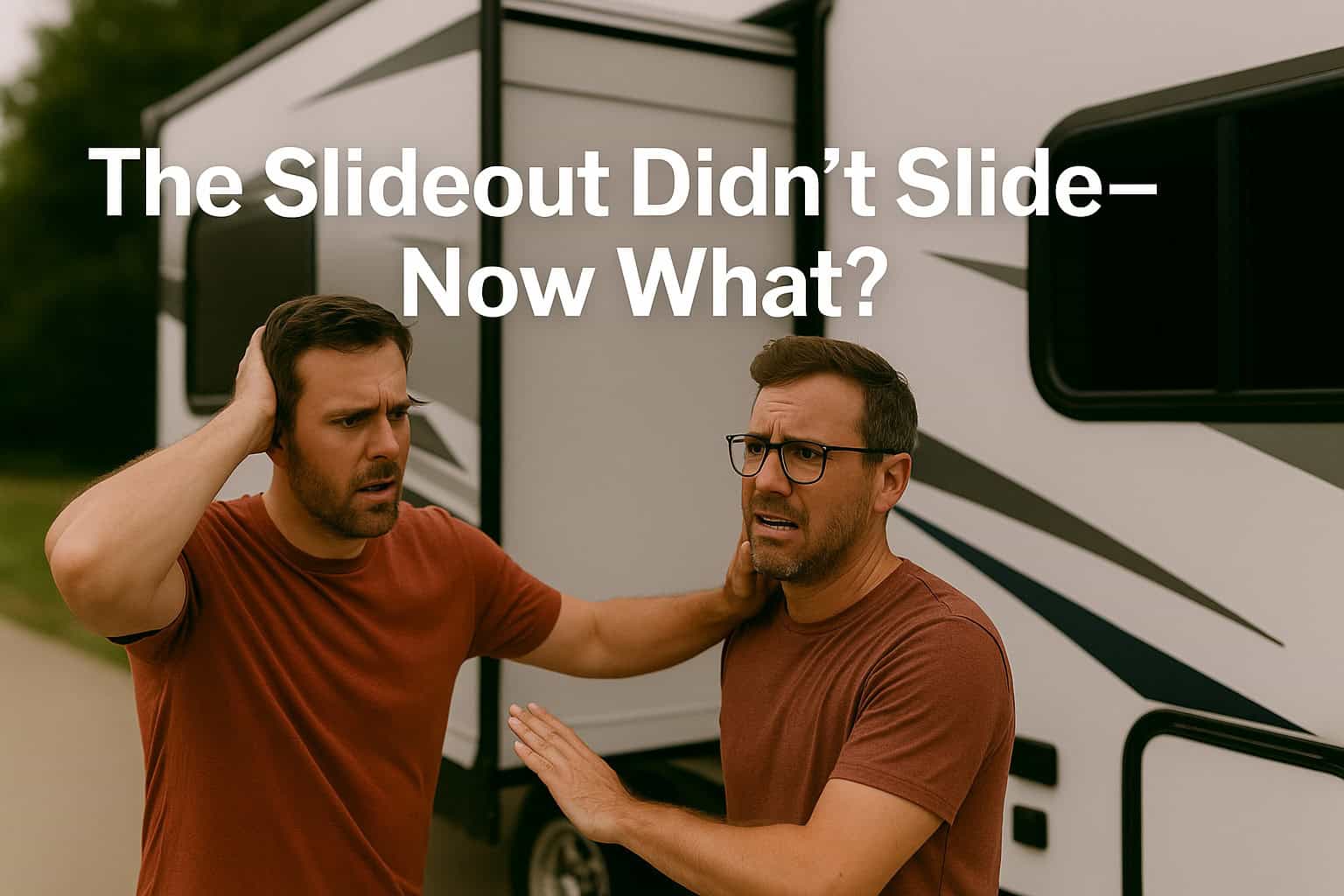
(Because sometimes your living room stays the size of a hallway.)
You’ve arrived.
You're level, you're plugged in, your awning’s ready for action.
You hit the switch for the slideout and… nothing.
Maybe it groans. Maybe it clicks.
Maybe it just sits there like a stubborn teenager refusing to get out of bed.
Welcome to Slideout Limbo.
Don’t panic. Don’t shove it. And don’t Google “cost of RV slide repairs” just yet.
Let’s walk through the smart, safe, and slightly sarcastic way to deal with a stuck slideout.
⚡ Step 1: Check Your Power (Because It’s Always the Power)
Before blaming the slide motor, check the basics:
-
Are you plugged in or running on battery?
-
If battery, is it charged enough? (Low voltage = weak or no movement)
-
Fuses and breakers: Check the fuse panel for a blown fuse or tripped breaker marked “Slide” or “Living Room.”
🧠 Pro tip: Some slide systems need at least 12.0V to engage. If you're running low, they might not budge at all.
🔄 Step 2: Try the Manual Override
If power’s not the issue, look for your slide’s manual override.
This could be:
-
A crank handle you insert into a small port outside the rig
-
A bolt or nut on the slide motor (often requires a wrench or socket)
-
An Allen key system (don’t ask why, just roll with it)
Go slow.
Manual retraction isn’t fun, but it gets the job done—and saves your vacation from turning into a garage appointment.
🎮 Step 3: Reset the Control Board
Many modern slideouts have a brain. And like all RV brains, it sometimes needs a reboot.
Try this:
-
Turn off battery disconnect (if you have one)
-
Unplug shore power
-
Wait 30–60 seconds
-
Turn everything back on
If the slideout was “confused” or stuck in an error loop, this often clears the issue.
🛠 Step 4: Look for Obstructions
You’d be amazed what can stop a slide:
-
Bunched-up rug or mat
-
Drawer that popped open
-
Loose dog toy, shoe, or mystery sock
-
Camp chair stashed “just for the drive”
Check inside AND outside. Sometimes a slide topper gets caught, or the exterior seal folds in and binds things up.
🧹 Step 5: Clean and Lube the Tracks
Dry, dirty, or sticky slide rails can cause drag.
Spray them (if accessible) with a slide-safe lubricant—usually a dry lube that doesn’t collect dust.
🎯 Avoid WD-40. It’s not for this job and can actually make things worse.
🚫 Step 6: Don’t Force It
If something sounds like it's grinding, clicking, or smoking—STOP.
RV slide motors aren’t known for their brute strength. Forcing movement when something’s wrong can:
-
Strip gears
-
Break the motor
-
Crack the slide framing
-
Ruin your day, week, and budget
Call a mobile tech if you’re stuck between “almost out” and “uh-oh.”
🧠 Bonus Slideout Sanity Tips
-
Slide first, level second. Most systems prefer you extend before stabilising
-
Keep a manual override tool inside the rig, not buried under six bins in the pass-through
-
Use a checklist before departure to avoid retracting over obstacles
-
Never skip your annual slide maintenance—a little lube saves a lot of grief
💬 Final Thoughts
RV slideouts are magical—until they’re not.
The key is staying calm, diagnosing logically, and never assuming the worst right away.
Nine times out of ten, it’s a power issue, user error, or small blockage—not the end of your camping dreams.
And if it’s number ten?
Well, that’s why we carry tools, phone numbers for mobile techs, and maybe a bottle of wine.
🐟 Want to preview your campsite BEFORE you need to fully extend?
Use Campground Views to see the space, slope, trees, and clearance before you arrive.
No more “I hope this doesn’t hit a pole” vibes.
🔗 Follow us for more no-drama setup tips, rig-saving routines, and relatable moments from life on the road.