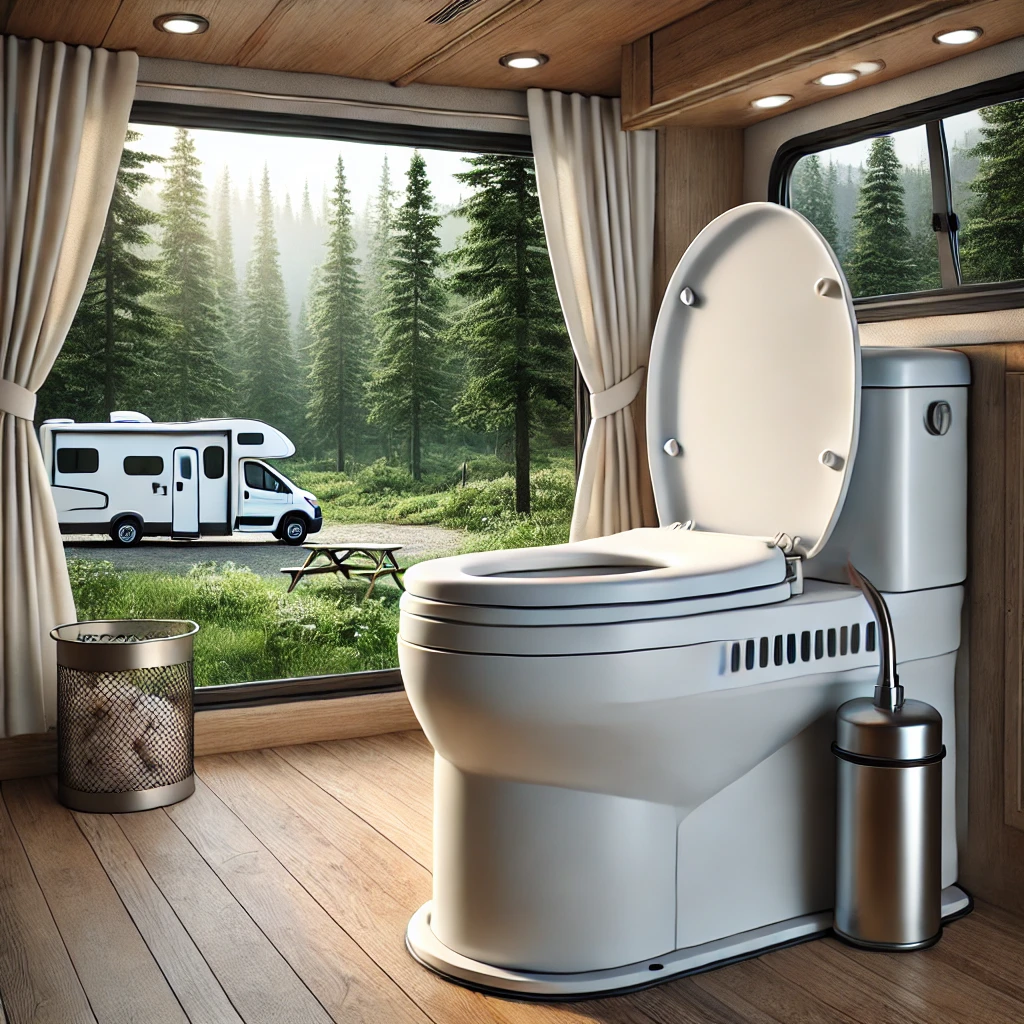
For campers, RVers, and off-grid adventurers,
composting toilets offer an
eco-friendly, water-saving alternative to traditional RV or campground restrooms. Whether you’re looking to reduce your environmental footprint, enjoy
off-grid camping, or avoid the hassle of black water tanks, composting toilets provide a
simple and sustainable solution.
If you’re
new to composting toilets, this guide will break down
how they work, their benefits, and why they might be the perfect option for your outdoor adventures.
What Is a Composting Toilet?
A
composting toilet is a waste management system that
naturally breaks down human waste using
organic materials like sawdust, coconut coir, or peat moss—without using water. Instead of flushing waste into a tank or sewer, it
separates liquids and solids, allowing for
odor-free decomposition and easy disposal.
Unlike traditional RV toilets,
composting toilets don’t require a black tank, making them a
low-maintenance and environmentally friendly choice.
How Does a Composting Toilet Work?
Composting toilets operate through a
simple, natural process that turns waste into compost-like material. Here’s how it works:
1. Separation of Liquids & Solids 🚽
Most composting toilets have a
separating system that diverts
urine into one container and
solids into another. This separation is key to
eliminating odors because moisture is the main cause of bad smells.
- Urine is stored in a separate container and can be emptied regularly.
- Solids fall into a chamber filled with a carbon-rich material like sawdust or coconut coir.
💡
Pro Tip: Some models use
agitation handles to mix the solids, speeding up decomposition.
2. Composting Process 🌿
Once waste enters the
solids chamber, it begins the
natural decomposition process, breaking down over time.
✔
Carbon-Rich Covering – After each use, a handful of
sawdust, peat moss, or coconut coir is added to help absorb moisture and reduce odors.
✔
Aeration & Ventilation – Many composting toilets include a
fan or vent system to promote airflow, which speeds up decomposition.
✔
Microbial Breakdown – Bacteria and microbes break down the waste, turning it into dry, compost-like material.
💡
Pro Tip: To keep things running smoothly,
never add wet wipes, toilet paper with chemicals, or anything non-biodegradable into the solids bin.
3. Waste Disposal ♻️
Disposing of waste in a composting toilet is much
easier and less messy than dealing with a black tank.
- Urine: Can often be diluted with water and safely dumped on soil (where permitted) or in a designated dump station.
- Solids: Once broken down, it resembles dirt and can be bagged and disposed of in trash bins, composted in designated areas, or buried (where legal).
💡
Pro Tip: Most campers empty their composting toilet every 2-4 weeks, depending on use.
Benefits of Using a Composting Toilet While Camping
1. No Need for Black Water Tanks 🚐
✔ Avoids the hassle of
dumping sewage at RV parks or designated dump stations.
✔ Eliminates the risk of
tank leaks or odors inside your camper.
✔ Saves space—perfect for
small RVs, vans, or tiny homes.
2. Saves Water 💧
✔ Uses
no water, making it ideal for
boondocking or dry camping.
✔ Extends your
freshwater supply, meaning fewer refills.
✔ Eco-friendly and great for
off-grid living.
3. Odor-Free & Easy to Maintain 👃
✔ Separating
liquids from solids prevents the typical
sewer smell.
✔ Carbon-rich materials
neutralize odors naturally.
✔ No need for
harsh chemicals like in traditional RV toilets.
4. Environmentally Friendly 🌱
✔ Reduces
wastewater pollution.
✔ Can be
composted and returned to nature in some locations.
✔ Low-energy solution for
sustainable camping.
💡
Did You Know? Traditional RV toilets
flush up to 1 gallon of water per use, while composting toilets use
zero!
How to Maintain a Composting Toilet
To keep your composting toilet running smoothly:
✔
Empty urine container every 2-4 days to prevent overflow.
✔
Stir the solids chamber regularly (if your model has a mixing system).
✔
Add fresh sawdust or peat moss after each solid waste use.
✔
Keep ventilation fans running to speed up decomposition.
✔
Clean with vinegar or eco-friendly solutions (avoid harsh chemicals).
💡
Pro Tip: If odors arise, add
more sawdust or coconut coir to balance moisture levels.
Who Should Consider a Composting Toilet?
✅
Perfect for:
✔ RVers and van-lifers who want to
eliminate black tanks.
✔ Boondockers or off-grid campers
who need water-free solutions.
✔ Eco-conscious travelers looking for
sustainable camping options.
✔ Campers in remote areas with
limited access to dump stations.
❌
May Not Be Ideal If:
🚫 You camp
exclusively at full-hookup sites with access to sewer connections.
🚫 You dislike the idea of
handling compost or manually emptying containers.
🚫 You have
a very large family, requiring more frequent emptying.
Final Thoughts: Is a Composting Toilet Right for You?
Composting toilets are a
game-changer for off-grid camping, reducing water use, eliminating black tanks, and offering a more
environmentally friendly waste solution.
✔
No messy black tanks
✔
Odor-free with proper maintenance
✔
Perfect for boondocking and dry camping
If you love the idea of
low-maintenance, eco-friendly camping, a composting toilet might be your next great upgrade!