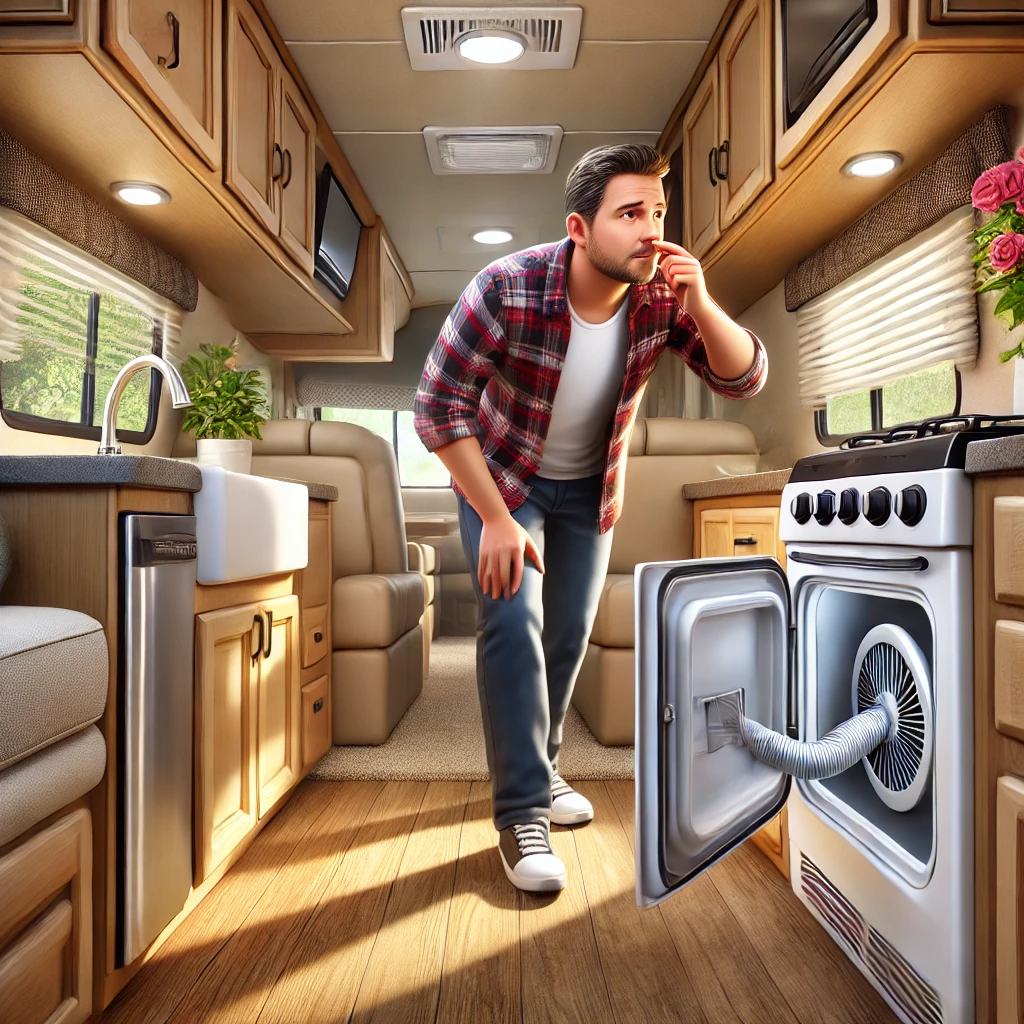
Your Nose Knows: Don’t Ignore the Warning Signs
RVs are like rolling homes—cozy, convenient, and packed with everything you need for adventure. But what happens when your RV starts smelling… off?
A strange odor might seem like nothing at first, but in an RV, it can signal serious problems—from propane leaks to mold, electrical issues, or even something burning. Ignoring it could lead to expensive repairs, health risks, or even danger on the road.
Here’s a breakdown of the most common weird RV smells, what they mean, and how to fix them before they ruin your trip.
1. Rotten Egg Smell = Propane Leak (Or Bad Water)
🚨 Danger Level: HIGH
A rotten egg or sulfur smell in your RV should never be ignored—it’s often a propane leak. Since propane is odorless, manufacturers add a chemical called ethyl mercaptan to give it a distinctive sulfur-like scent.
How to Check for a Propane Leak:
✔ Turn off the propane tank immediately
✔ Open windows and doors to ventilate the area
✔ Check all propane connections with a soapy water solution (bubbles indicate a leak)
✔ DO NOT use flames or electrical switches
🚧 If you suspect a major leak, evacuate and call a professional before using propane again.
🚨 Exception: If the rotten egg smell is coming from your water heater or faucet, your water supply may have too much sulfur. Try flushing your water tank or replacing the anode rod in your heater.
2. Musty, Damp Smell = Mold or Water Damage
🚨 Danger Level: MEDIUM-HIGH
If your RV smells like a wet basement, you may have a moisture problem leading to mold. This can happen if:
✔ There’s a hidden water leak in the roof, walls, or plumbing
✔ Your AC or vents aren’t circulating air properly
✔ Your RV has been sitting unused in humid conditions
How to Fix It:
✔ Check for leaks – Inspect your roof, windows, and pipes for signs of water damage
✔ Use a dehumidifier – Helps dry out excess moisture inside the RV
✔ Clean with vinegar or mold-killing spray – Target areas like carpets, upholstery, and cabinets
🚧 Mold can trigger allergies and respiratory issues, so don’t let it spread!
3. Burning Plastic or Electrical Smell = Overheating Wires
🚨 Danger Level: EXTREMELY HIGH
A burning plastic, fishy, or electrical smell is often a sign of an overheating wire or electrical fire hazard. Common culprits include:
✔ A faulty outlet or overloaded circuit
✔ A damaged appliance with frayed wiring
✔ A problem with your inverter, converter, or battery system
How to Fix It:
🚧 Turn off power IMMEDIATELY if you smell burning plastic or wires!
✔ Check all outlets and appliances for signs of melting or discoloration
✔ Unplug everything and reset your electrical system
✔ If the smell persists, call an RV electrician ASAP
🔥 Electrical issues can quickly lead to a fire—don’t take risks!
4. Sewage or Rotten Smell = Black Tank Trouble
🚨 Danger Level: MEDIUM
If your RV smells like a sewer, your black tank (toilet waste tank) is likely the issue. This can happen when:
✔ The tank needs to be emptied (obvious, but worth mentioning!)
✔ The vent pipe is clogged or blocked
✔ The seals on your toilet are cracked or leaking
How to Fix It:
✔ Dump your black tank and rinse it thoroughly
✔ Check the toilet seals and replace them if needed
✔ Make sure the roof vent is clear (debris or nests can block airflow)
🚧 Pro Tip: Always keep your black tank closed until it’s time to dump—leaving it open lets odors (and worse) build up!
5. Sweet, Maple Syrup Smell = Antifreeze or Coolant Leak
🚨 Danger Level: HIGH
A sweet, syrupy smell coming from your engine area could mean your coolant is leaking. This is dangerous because:
✔ Coolant keeps your engine from overheating
✔ Leaks can lead to engine failure if not fixed
✔ Antifreeze is toxic to pets and wildlife—clean up spills immediately
How to Fix It:
✔ Check under your RV for leaks (coolant is often green, pink, or orange)
✔ Inspect hoses and radiator connections for cracks
✔ Refill coolant levels but get a mechanic to inspect for leaks ASAP
🚧 If your temperature gauge is rising, pull over and let the engine cool before driving further.
6. Garbage or Dead Animal Smell = Rodents or Pests
🚨 Danger Level: LOW to HIGH (Depending on the source)
If your RV smells like rotting garbage or something “died” inside, you could have a rodent problem. Mice, squirrels, and other critters love to:
✔ Nest in walls, vents, and storage compartments
✔ Chew on wires, insulation, and food packaging
✔ Leave behind droppings, urine, or (unfortunately) carcasses
How to Fix It:
✔ Check under seats, inside storage areas, and behind walls for signs of rodents
✔ Use natural deterrents like peppermint oil or traps to prevent infestations
✔ Seal all entry points around pipes, vents, and doors
🚧 Rodents chewing on electrical wires can create fire hazards—don’t ignore this!
Final Thoughts: Your Nose is Your Best RV Safety Tool
Weird smells in your RV aren’t just annoying—they’re warning signs of potential safety hazards, costly repairs, or serious health risks.
🚐 If something smells off, don’t ignore it!
✔ Rotten Egg Smell? → Check for propane leaks or bad water
✔ Musty, Damp Smell? → Look for mold or water leaks
✔ Burning Plastic Smell? → Shut off power and check for electrical issues
✔ Sewage Smell? → Inspect and clean your black tank
✔ Sweet, Syrupy Smell? → Check for a coolant leak
✔ Rotten Garbage Smell? → Look for rodents or pests
If you ever smell something truly unusual or persistent, investigate immediately. It could save you from an expensive repair—or something much worse.
💡 Looking for the perfect campground—without the smell of a sewage dump? Take a 360-degree virtual tour at CampgroundViews.com before you book your next spot! 🚐🔍