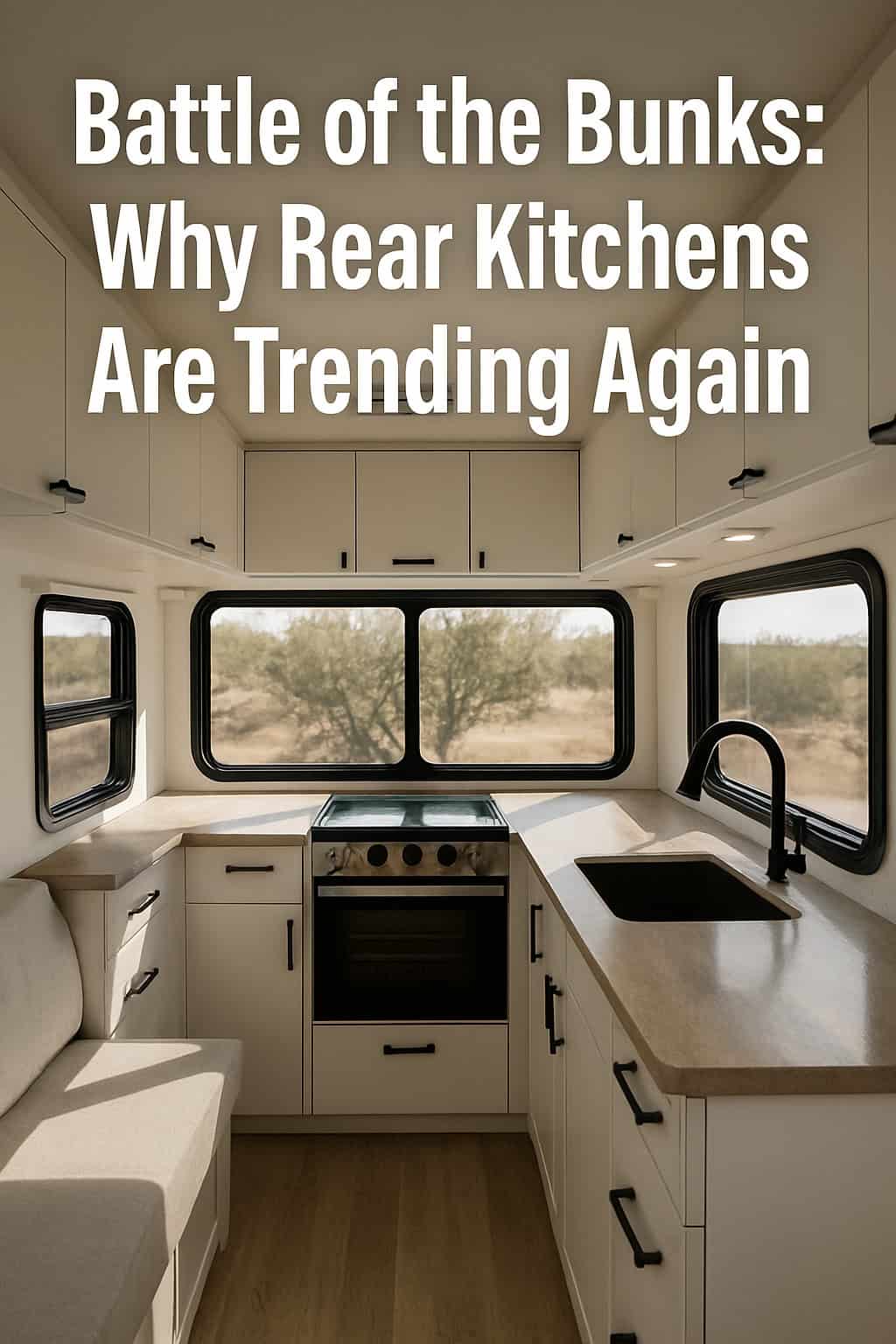
(They're not just for vintage trailers anymore.)
For years, center-kitchen or front-kitchen layouts dominated RV design. Rear kitchens? Not so much. But suddenly—in 2025—they’re making a big comeback.
So what’s behind the surge in popularity? It’s more than nostalgia. Rear kitchens are getting smart, efficient, and surprisingly stylish.
Let’s break down why this classic layout is hot again—and if it’s right for you.
🍳 Why Rear Kitchens Are Trending (Again)
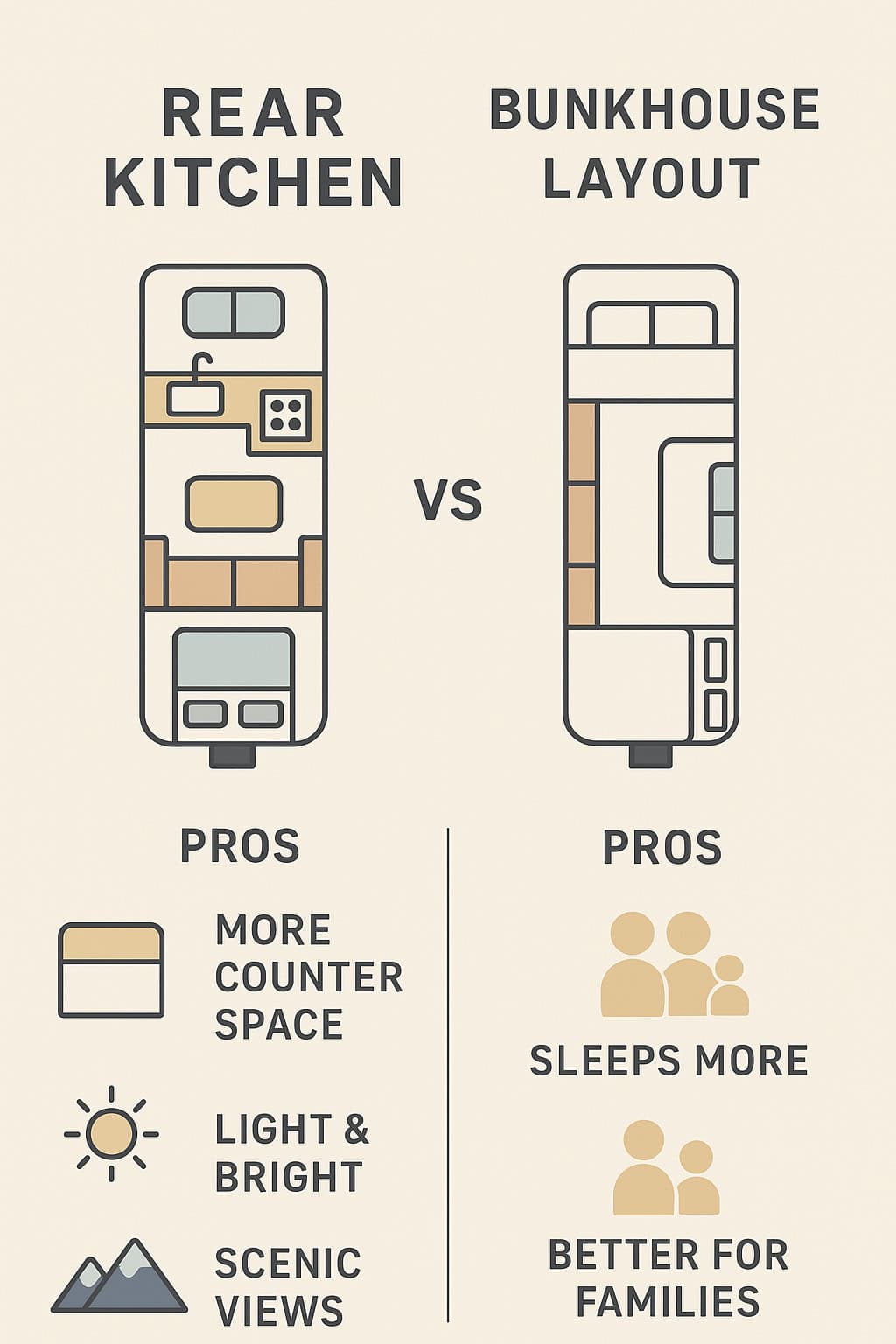
1. More Counter Space
The full-width rear gives you way more prep and cooking surface than a mid-kitchen can.
2. Better Flow
Guests and family don’t have to squeeze past the stove to move around the rig. Cooking stays out of the way.
3. Window Placement = Epic Views
Many rear kitchens have panoramic windows—so you're chopping onions with a view of the canyon. Yes, please.
4. Balanced Weight Distribution
Placing heavy appliances at the back helps balance weight (especially in trailers).
5. They're Instagram-Ready
Modern materials, clean design, and built-in lighting make today’s rear kitchens feel boutique—not boxy.
🛏️ So What’s Losing Out?
Surprisingly, bunkhouse layouts are getting less love—especially in smaller rigs. Why?
-
More solo travelers and couples on the road
-
Full-timers want office space or open lounges, not unused bunks
-
Bunk areas often feel cramped and underutilized
That doesn’t mean bunks are dead—but they’re no longer the go-to choice for every layout.
🧠 Rear Kitchen RVs Are Ideal If You...
-
Cook often in the rig
-
Want a “homey” feel with separated kitchen/living zones
-
Prefer windows in the back instead of a bedroom wall
-
Don’t need bunks or a giant lounge area
Final Thoughts
Rear kitchens were once seen as outdated. Now? They’re a smart, sleek solution for modern RVers who want more function, space, and view.
🐟 Want to peek inside before you commit? Use Campground Views to preview sites where rear kitchens shine—like cliffside pads and scenic back-ins.
🔗 Follow us for RV layout trends, shopping tips, and space-maximizing design ideas.