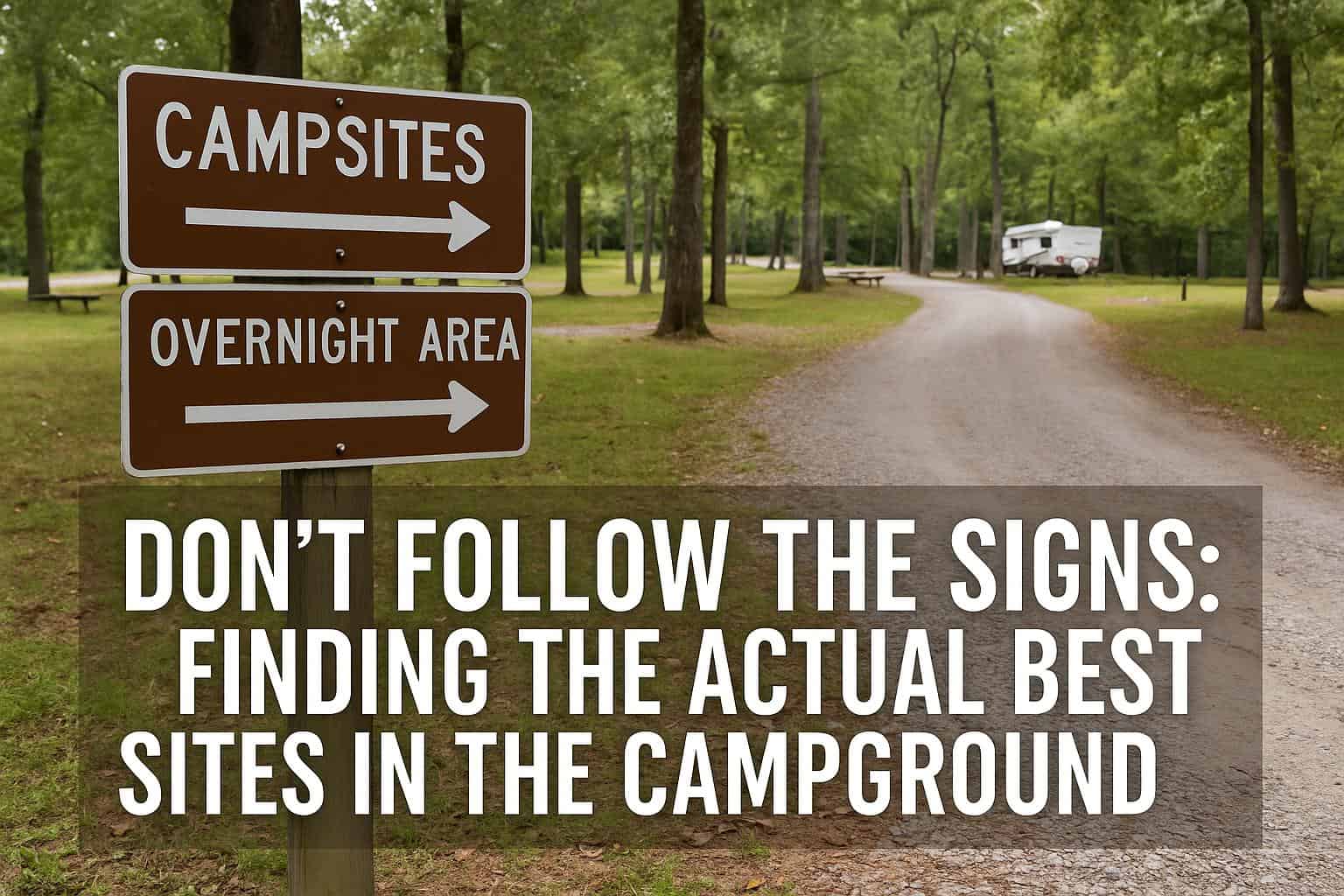
(Because sometimes Loop C is just hype—and the best spot is hiding in plain sight.)
You roll into a new campground. The signs point you toward the “premium” loop, the “lakeview” sites, the “preferred pull-throughs.”
You follow the arrows. You trust the map.
And then you pull into Site #38—aka a gravel slope with no shade, next to the dumpsters, across from the bathhouse where every child under 10 is apparently doing wind sprints.
Congratulations! You’ve just learned the golden rule of campground wisdom:
Don’t trust the signs. Trust the site.
Let’s dive into how to find the real best spots in a campground—no brochures required.
🧭 1. Start With the Layout… Then Question Everything
The site map says one thing. Your eyes say another.
Maps don’t show:
-
Slope
-
Shade
-
Obstructions
-
Picnic table condition (ever tried sitting on a splinter grenade?)
-
Where the sun hits your rig at 3PM like a magnifying glass on an ant
Lesson: The site with the “view” might also have no privacy, no trees, and a breeze that could knock over your awning. Be skeptical.
🤫 2. The Hidden Gems Are Usually the Quiet Ones
Here’s what the real best sites tend to have:
-
Tree cover for natural shade (and hammock hanging)
-
Space between sites so you’re not waving at your neighbor mid-toast
-
A little slope away from the fire ring (hello, smart drainage)
-
Distance from high-traffic paths, dumpsters, and restrooms
The sites no one talks about? Often gold.
Loop D back corner behind the ranger shed? Might just be your personal nature spa.
🚻 3. Beware the “Close to the Bathrooms” Trap
Seems convenient—until you’re serenaded all night by slamming doors, flashlight beams, and kids running full speed in Crocs.
Ideal range: close enough for emergencies, far enough for peace.
Aim for one or two rows away if possible. You’ll thank yourself at 11PM.
🐾 4. Traveling with Pets? Watch the Terrain
Your dog doesn’t care about lake views.
They care about:
-
Shade
-
Grass
-
Not stepping in hot gravel
-
Not being tied out next to the main road
Look for sites near open areas, trails, or hidden corners with enough space for zoomies (but not so close to traffic you’re playing leash roulette).
🔌 5. Hookups Matter—But So Does Reach
Yes, full hookups are great.
But what’s better? Hookups in the right spot.
We've all pulled into a “full hookup” site only to find:
-
The water spigot is under your slide
-
The power pole is 14 feet from where it should be
-
The sewer outlet is uphill (yes, uphill)
Pro tip: Always check the placement and orientation before you fully commit to parking. Or better yet…
🐟 Use CampgroundViews to Actually See the Site Before You Book
Skip the guesswork and map-gazing frustration. CampgroundViews lets you:
-
Take a virtual walk through the campground
-
See real site spacing, slope, sun exposure, and privacy
-
Choose the best site based on what matters to you—not what someone put on a diagram in 2006
Because let’s be honest: “pull-through with picnic table” doesn’t mean much if it’s slanted, sunny, and facing a parking lot.
💬 Final Thoughts
Finding the best campsite isn’t about following the signs.
It’s about using your eyes, trusting your gut, and occasionally ignoring the fancy loop names in favor of the awkward-numbered site near the tree line.
Camp smarter. Pick better. And don’t let a glossy map tell you where to sleep.
🔗 Want to find the real best spot next time?
Use CampgroundViews to preview every angle before you arrive—so you get the site that’s actually right for you, not just the one with the biggest font.