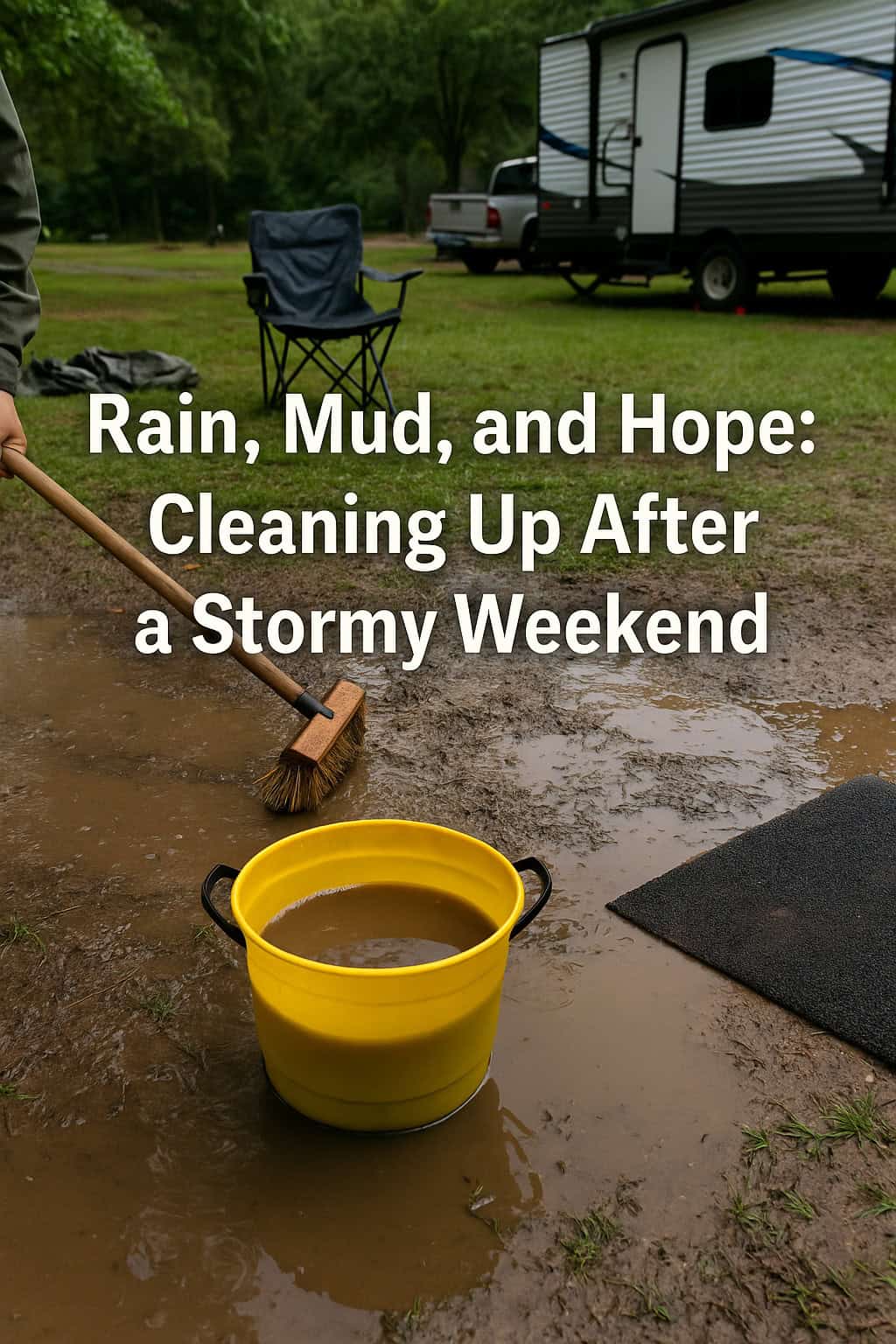
(Because camping in the rain builds character—and tests your relationship with your gear.)
Let’s be honest:
Camping in the rain isn’t always charming.
It’s wet towels. Muddy footprints. A puddle in your tent. And that moment when your dog brings half the forest inside your RV.
But stormy weekends happen.
And when they do, knowing how to clean up right afterward is the difference between “Well, that wasn’t too bad” and “Why do we even camp?”
Here’s how to dry, clean, and salvage your gear—and your sanity—after a soaking weekend.
🌧 1. Accept That Everything is Wet
First rule of post-rain camping: Don’t pretend things are dry.
If it’s damp, it’s staying damp… until you take action.
Before you leave the campground:
-
Shake out tarps and rugs (mud is easier to shake than scrub)
-
Wipe down tables, bins, and anything plastic with microfiber or shop towels
-
Bag wet clothes and gear separately from the dry stuff—trust us on this
Pro tip: Keep a “wet stuff” bin or bag just for this kind of trip. Saves your clean gear from smelling like disappointment.
🥾 2. Prioritize What Can’t Stay Wet
Some items get moldy or warped fast. Focus on drying these first:
-
Tents
-
Sleeping bags and pads
-
Camp chairs
-
Anything canvas or wood
-
Paper maps, books, or card games (RIP to Monopoly if you waited too long)
If it’s even a little wet, it’s got potential to mildew. Get it open, aired out, and in the sun (or under a fan) as soon as you get home.
🧼 3. Hose Now, Regret Later
Mud doesn’t just stick. It sets.
Hose off:
-
Coolers
-
Tent stakes
-
Shoes and boots
-
The bottom of your gear bins
-
Kids (kidding… mostly)
Let it all air-dry before storing it away. Wet mud turns into hard crust that will haunt your next trip.
🧽 4. Deal with the Smells
Rain + dirt + enclosed space = eau de swamp bag.
To deodorize:
-
Sprinkle baking soda in shoes and gear bags
-
Let sleeping bags air out in the sun
-
Spray tent interiors with diluted white vinegar or fabric refresher
-
Wash any clothes that even thought about getting damp
Don't forget your car—especially if it hauled the stinkier stuff home. That backseat wet-dog aroma can linger like an emotional wound.
🧠 5. Take Inventory—This Is When Gear Breaks
Storms are rough on equipment.
Check:
-
Bent poles, broken zippers, or frayed lines
-
Tarps with new “ventilation” holes
-
Soggy matchbooks or dead lighters
-
Electrical cords or surge protectors that might’ve taken a hit
This is the time to clean, repair, or toss it—not three days before your next trip when you discover your tent smells like feet and defeat.
🧺 6. Bonus: The “Garage Campout”
Set up your tent or gear in your garage, driveway, or backyard after a wet weekend.
-
Let things dry completely
-
Sweep out dirt
-
Shake off spiders who hitched a ride
-
Mentally relive your soggy adventure (optional)
It may look odd, but it’ll save you from pulling out a moldy tent three months later and wondering if it’s worth saving.
🐟 Want to Avoid the Mud pit Next Time?
Use CampgroundViews to preview your site before you book.
-
Check for paved pads vs. grassy pits
-
Spot potential drainage issues
-
See if your site’s in a low-lying area or on higher, drier ground
-
Know if your fire pit is a feature—or a flooded crater
A little scouting means fewer surprises—and fewer soggy regrets.
💬 Final Thoughts
Rainy weekends happen.
It’s part of the deal when you trade four walls for open skies.
But with a smart cleanup strategy, a little patience, and maybe a dehumidifier, you can bounce back from even the muddiest mess.
And remember—those wet, ridiculous, nothing-went-right trips?
They make the best stories. Eventually.
🔗 Next trip on the radar?
Use CampgroundViews to pick sites that keep your gear (and your shoes) out of the swamp zone.