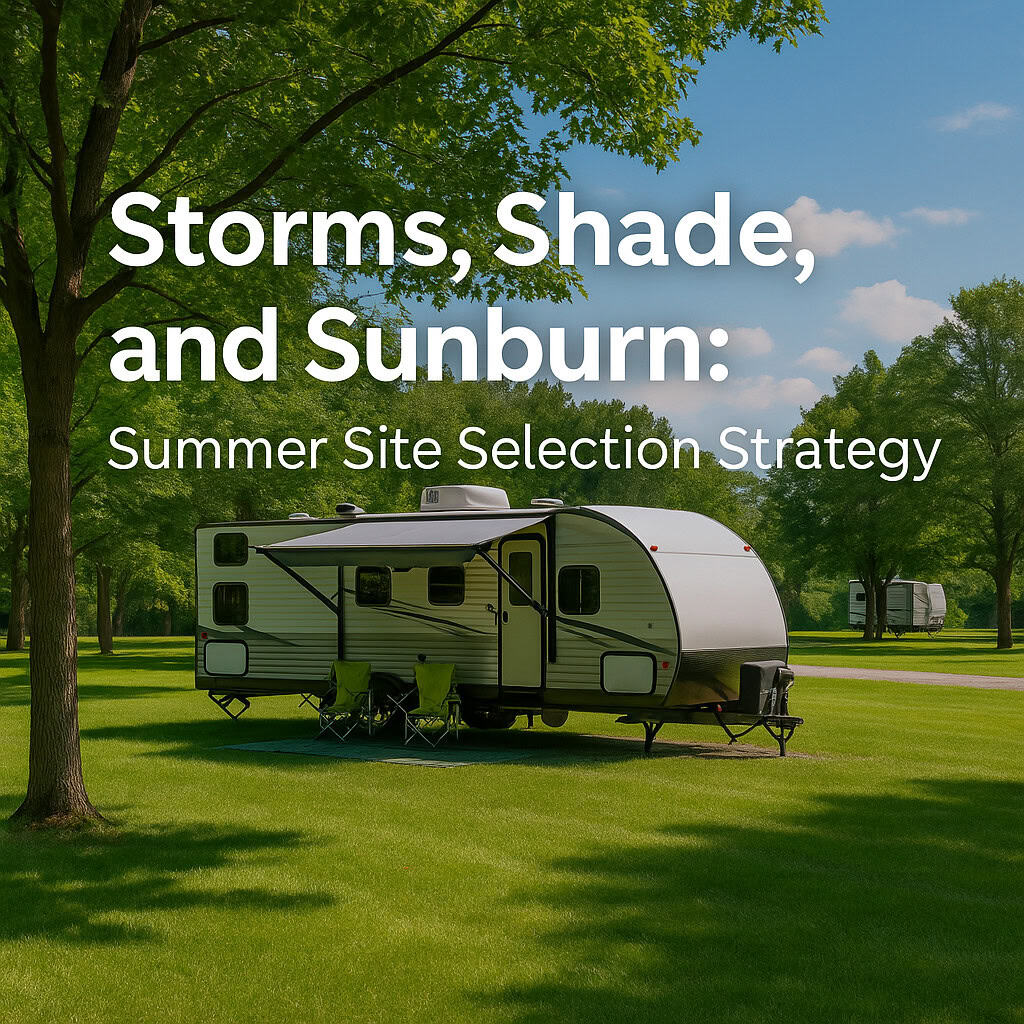
(Because the right campsite can make or break your whole trip.)
Summer camping can be glorious.
It can also feel like you’ve parked your rig in the middle of a convection oven—or the set of Twister.
When the sun’s blazing, the storms are building, and the bugs are biting, site selection isn’t just about the view. It’s about survival.
Here’s how to choose your summer site like a seasoned pro—and avoid a sun-scorched, wind-blown, sweat-soaked meltdown.
🌳 1. Prioritize Shade (But Don’t Trust It Blindly)
Best case: Tree cover over your rig and seating area = lower temps, happier pets, longer naps.
Things to watch out for:
– Dead limbs (“widowmakers”) above your slide-outs or awning
– Sappy pines that’ll coat your roof and attract ants
– Shade that disappears at 2 p.m. because the tree’s on the wrong side of the site
💡 Pro tip: Park with your fridge side in the shade if possible—it helps it run cooler and happier.
⛈ 2. Storm-Ready Positioning
Summer storms hit fast.
A calm morning can turn into sideways rain and 40-mph gusts before you’ve finished your iced coffee.
What to look for:
– Avoid low-lying spots where water pools
– Don’t park under tall, lone trees in open areas (lightning loves those)
– Make sure your awning can easily be retracted—don't leave it out when you leave camp
💡 Pro tip: Watch which way the wind tends to blow and park with your nose into it if possible. It helps reduce rocking and wind damage.
🌞 3. Beat the Heat With Smart Angles
You want your outdoor area to be usable after 10 a.m.
That means avoiding the full blast of afternoon sun.
What to consider:
– South and west exposures get hottest
– East-facing patios mean shaded evenings
– North-facing sites are often the coolest, but may get less light for solar setups
💡 Pro tip: Use satellite view on map apps to scout site orientation before booking.
🐜 4. Bugs, Brush, and Bite Zones
A pretty meadow? Might also be tick central.
That shady forest spot? Gorgeous—but might be mosquito HQ.
Before you commit:
– Look for standing water, thick brush, and tall grass = bug party
– Stay back from dense woods unless you’ve got heavy-duty repellents
– Gravel pads often have fewer bugs than dirt or grass
📍 5. Think About the Exit
You’re not just parking—you’re leaving eventually.
Avoid:
– Sloped sites that turn into mudslides when it rains
– Narrow turns you can’t back out of
– Sites that require Houdini-level maneuvering to exit when full
💡 Pro tip: If it looks tricky when it’s dry… imagine it during a thunderstorm.
💬 Final Thoughts
Summer site selection isn’t about paranoia—it’s about preparedness.
A little planning = a lot less sweating, swatting, or swearing when the weather shifts.
So scout the shade. Think like a storm. Dodge the sunburn.
And treat every campsite like it’s trying to test you (because it probably is).
🐟 Want to see the tree cover, angles, and exposure before you pick your site?
Use Campground Views to tour sites virtually and choose the one that fits your summer survival strategy—before you roll out.
🔗 Follow us for more campsite wisdom, hot-weather hacks, and stories from RVers who’ve learned to check the wind forecast before leveling the rig.