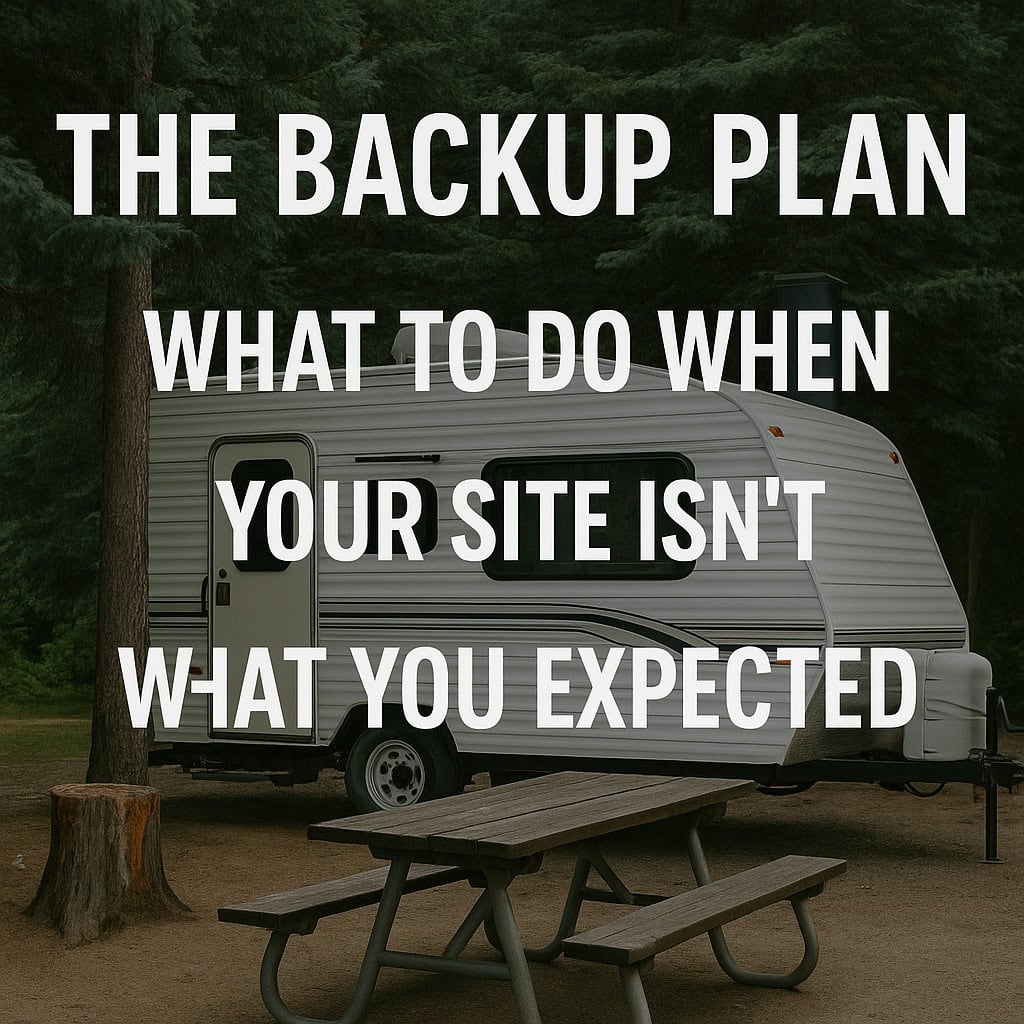
(Because “site 42” looked a lot different in your head.)
You booked it. You prepped for it. You drove five hours with snacks, playlists, and high hopes.
Then you arrive…
And your site? Yeah. Not great.
-
Sloped like a ski hill
-
Right next to the dumpsters
-
No shade, no view, and apparently… no table?
Now what?
Every camper gets hit with a curveball site sooner or later.
Whether it’s the terrain, the neighbors, or a mysterious puddle that refuses to dry—here’s how to pivot, adapt, and salvage the trip like a seasoned pro.
😬 Step 1: Don’t Panic (or Scream at the Map)
Your first instinct might be to groan, sulk, or deliver a dramatic monologue about betrayal and false advertising. Valid.
But here’s the truth: campsites change.
Trees get trimmed. Drainage shifts. That “quiet loop” now backs up to a construction crew fixing the septic line.
Take a breath. Don’t unpack yet. Let’s assess.
🕵️♀️ Step 2: Re-Evaluate Before You Commit
Before you fully set up:
-
Walk the site: Look for hidden perks (shade later in the day? windbreaks?)
-
Check your rig position: Can you angle it better? Park differently?
-
Scope alternatives: Are there open sites nearby? Can you switch?
Pro move: A polite word with the camp host or ranger might just get you a swap—especially if your site has an actual issue (like standing water, busted utilities, or missing amenities).
🪄 Step 3: Redefine the Setup
This is where you go creative camper mode.
Too sunny?
Break out extra shade cloths, tarp setups, or reposition your rig.
No space?
Get vertical—hanging gear, hammocks, and organizers are your friend.
No table or firepit?
Use your own gear or ask around—many campers are happy to lend a spare chair, grill, or laugh about “that one time our site was on a hill.”
📦 Step 4: Keep a ‘Just in Case’ Kit
Having a backup bin saves your bacon.
Pack a few “site fixer” items that don’t take much space but solve big problems:
-
Extra leveling blocks or wood planks
-
Shade tarp + bungees
-
Foldable table
-
Utility rug (for muddy or sloped areas)
-
Battery lanterns (for dark or unlit sites)
You don’t need to carry an entire campground… just enough to turn lemons into lemonade. Or at least into decent parking.
🧠 Step 5: Adjust the Expectations, Not the Experience
Camping isn’t about perfection—it’s about perspective.
So maybe this site isn’t the dream setup you envisioned.
But with the right mindset (and maybe a beverage), you can still…
-
Enjoy a campfire under the stars
-
Laugh about your “wonky picnic table”
-
Watch the kids turn a muddy patch into a mud kingdom
-
Tell the story later—because this will definitely become one
🐟 Want to Avoid Site Surprises?
Use CampgroundViews before you book.
You’ll get a virtual preview of:
-
Actual site layout and terrain
-
Proximity to bathrooms, roads, or other rigs
-
Shade, slope, trees, and table status (yes, that matters)
So instead of rolling in blind, you’ll know exactly what you’re working with—and whether you should bring extra leveling blocks or that pop-up canopy.
💬 Final Thoughts
Every seasoned camper has had a “this isn’t what I expected” moment.
It’s practically a rite of passage.
But with the right attitude, a little prep, and a plan B, you can turn any site into a good one—and still leave with memories, marshmallows, and maybe a slightly crooked RV photo for the album.
🔗 Preview before you park.
Use CampgroundViews to scout your site, plan your setup, and dodge those campsite surprises like a pro.
Because not all backup plans are bad—some just lead to better stories.