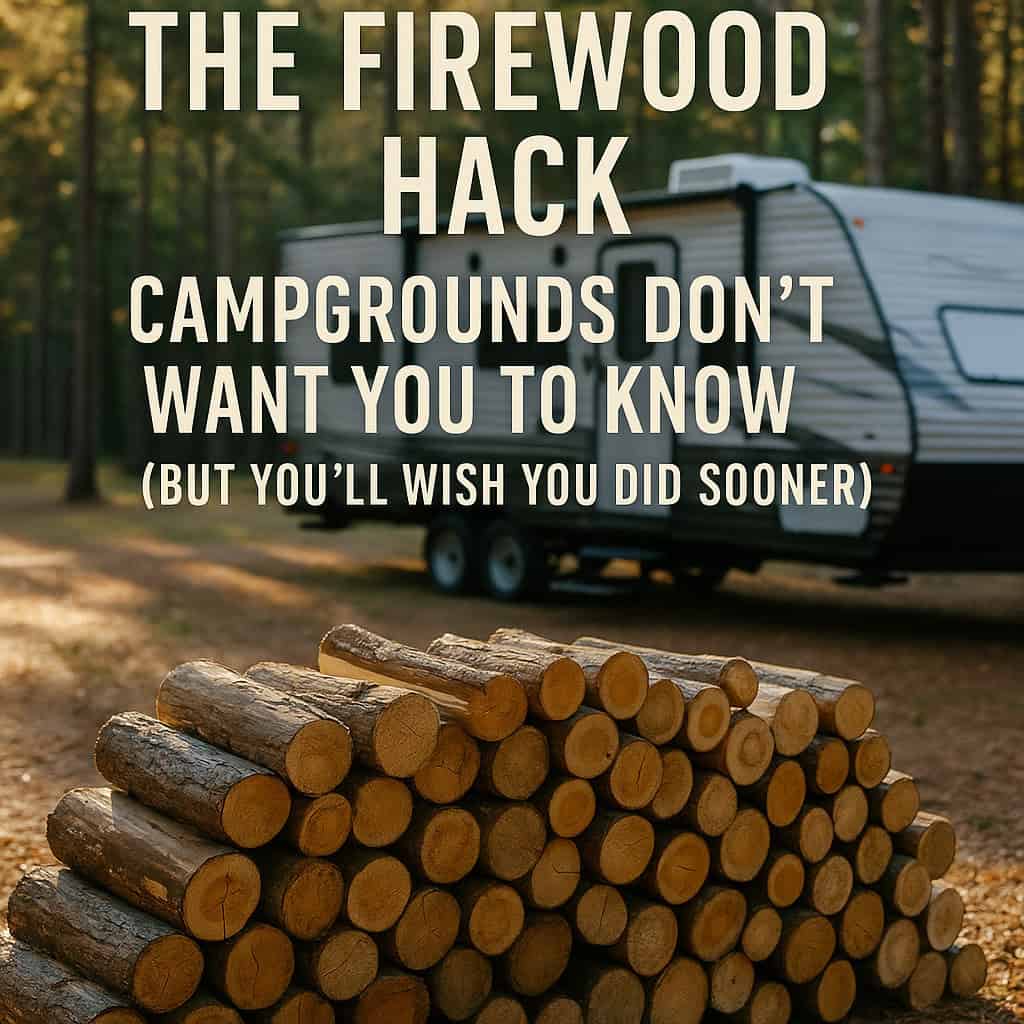
(Because $10 for six damp logs is daylight robbery.)
You pull into camp.
You find your spot. You’re ready for the fire.
Then you see the sign:
“No Outside Firewood.”
You walk to the camp store...
…and they hand you a tiny bundle of half-wet sticks—for ten bucks.
There’s a better way.
Here’s the smart, campground-friendly firewood hack that saves money, burns better, and makes fire-starting way easier.
🔥 The Truth About Firewood Rules
Most campgrounds aren’t trying to be mean.
They’re trying to protect the trees.
Bringing firewood from far away can spread bugs like:
-
Emerald ash borer
-
Gypsy moths
-
Asian longhorn beetles
These insects hitch a ride in wood, survive the trip, and destroy forests.
That’s why the rule exists: Burn it where you buy it.
Fair enough.
But that doesn’t mean you have to pay top dollar—or fight wet logs.
💡 The Firewood Hack: Make Your Own “Campfire Kit” Instead
Campgrounds say: “Don’t bring in wood.”
They don’t say: “Don’t bring in burnable material.”
And that’s where the hack comes in.
Instead of hauling wood, bring:
-
🔥 Compressed fire logs (like Duraflame or Enviro-log)
-
🔥 Dry kindling & fire starters (made at home)
-
🔥 Charcoal or wood pellets (in sealed bags)
These are legal to bring, easy to store, and way more reliable than mystery bundles from the camp store.
🪓 Step-by-Step: Build a Better Fire (Without Breaking Rules)
✅ Step 1: Buy One Small Bundle from the Campground
Yes, just one.
Use it for the ambiance, support the park, follow the rules.
✅ Step 2: Use Your Own Fire-Starter Kit to Get It Going
That’s where the real magic happens.
What to bring:
– Dryer lint in toilet paper rolls
– Cotton balls soaked in petroleum jelly
– Waxed paper or old candle bits
– Small sticks or wood shavings
– Charcoal cubes or fire-starting bricks
These start fast, burn hot, and don’t smoke like wet wood.
✅ Step 3: Use Charcoal to Boost the Burn
Throw in a few briquettes.
They add steady heat and make even soggy logs catch fire.
✅ Step 4: Keep a Compressed Log as Backup
Great for late-night fires or wet days when nothing else will catch.
🧠 Why This Works (And Why It’s Totally Allowed)
Compressed logs, kindling, and fire-starters are:
-
Treated, manufactured, or recycled materials
-
Not raw wood from another forest
-
Packaged and pest-free
Most campgrounds allow these because:
✔️ They don’t carry invasive insects
✔️ They’re cleaner-burning
✔️ They help your purchased firewood actually light up
Still unsure? Ask at check-in. Say:
“I’ve got a compressed log and some DIY kindling—is that okay to use with your firewood?”
Most rangers will say yes—or give you a clear answer.
💸 Why It Saves You Money
Let’s do the math:
-
Campground wood: $10/bundle, burns in 45 minutes
-
Compressed log: $3–$4, burns 2–3 hours
-
Homemade starters: basically free
You use less wood, get longer burns, and avoid the “Is this even lit?” frustration.
That’s a win every night of the trip.
🔍 Bonus Fire Tips: Burn Like a Pro
– Stack Smarter
Try the log cabin or teepee setup.
Leave room for air, and place fire-starters under the kindling—not buried inside.
– Dry It Out First
If campground wood is damp, split it or lay it near the fire pit for 20–30 minutes before lighting.
– Block the Wind
Use a fire ring, rocks, or chairs to shield the flame while it gets going.
– Start Small
Don’t light a giant log right away. Build up from twigs to small pieces, then add the big stuff.
🛑 What NOT to Do
-
❌ Don’t bring untreated logs from home
Even if it looks clean—it can carry pests in the bark or sap. -
❌ Don’t burn trash
Plastic and foil release toxins. Even paper plates can coat your food grates. -
❌ Don’t assume it’s okay—always check signs
Some campgrounds are stricter than others (especially in national parks or high-risk zones).
🧰 What to Keep in Your Fire Kit
Want an easy setup that lives in your RV or bin? Here’s your checklist:
✔️ Gallon zip bag of dryer lint, cotton balls, or wax
✔️ Fire-starter bricks or cubes
✔️ Small sealed bag of charcoal or pellets
✔️ 1–2 compressed logs (keep sealed/dry)
✔️ Long lighter or waterproof matches
✔️ Gloves (campfire heat hurts fast)
✔️ Small hatchet (for splitting kindling—if allowed)
Optional:
– Foldable fire pit (if your site requires raised fires)
– Collapsible bellows or fan to boost flames
🔥 But What About Cooking?
Yes—compressed logs and some fire starters are not meant for cooking.
Check the label. If it says “not for food,” use them only to start the fire, not cook over them.
Here’s the workaround:
-
Get the fire going with your compressed log
-
Wait until it’s mostly burned down
-
Then cook over the coals with fresh wood or charcoal
Safe. Tasty. Easy.
💬 Final Thoughts
Campfire nights are the best part of any trip.
But nothing kills the vibe faster than overpriced, soggy wood—or worse, no fire at all.
This hack gives you:
-
Easier lighting
-
Longer burns
-
Fewer bug bites (from running back and forth)
-
And fewer groans when someone says, “Who’s got the firewood?”
It’s legal, clean, smart—and once you try it, you’ll never go back to paying ten bucks for wet sticks again.
🧭 Want to See If a Campground Has a Fire Ring or Sells Firewood Ahead of Time?
Use Campground Views to preview each site and see if they allow fires, have fire rings, or sell firewood—so you can pack the right kit and burn smarter, not harder.
🔗 Follow us for more RV hacks, campsite tricks, and campground-smart solutions that actually work.
No gear reviews. No fluff. Just useful advice that saves your trip—and your firewood budget.