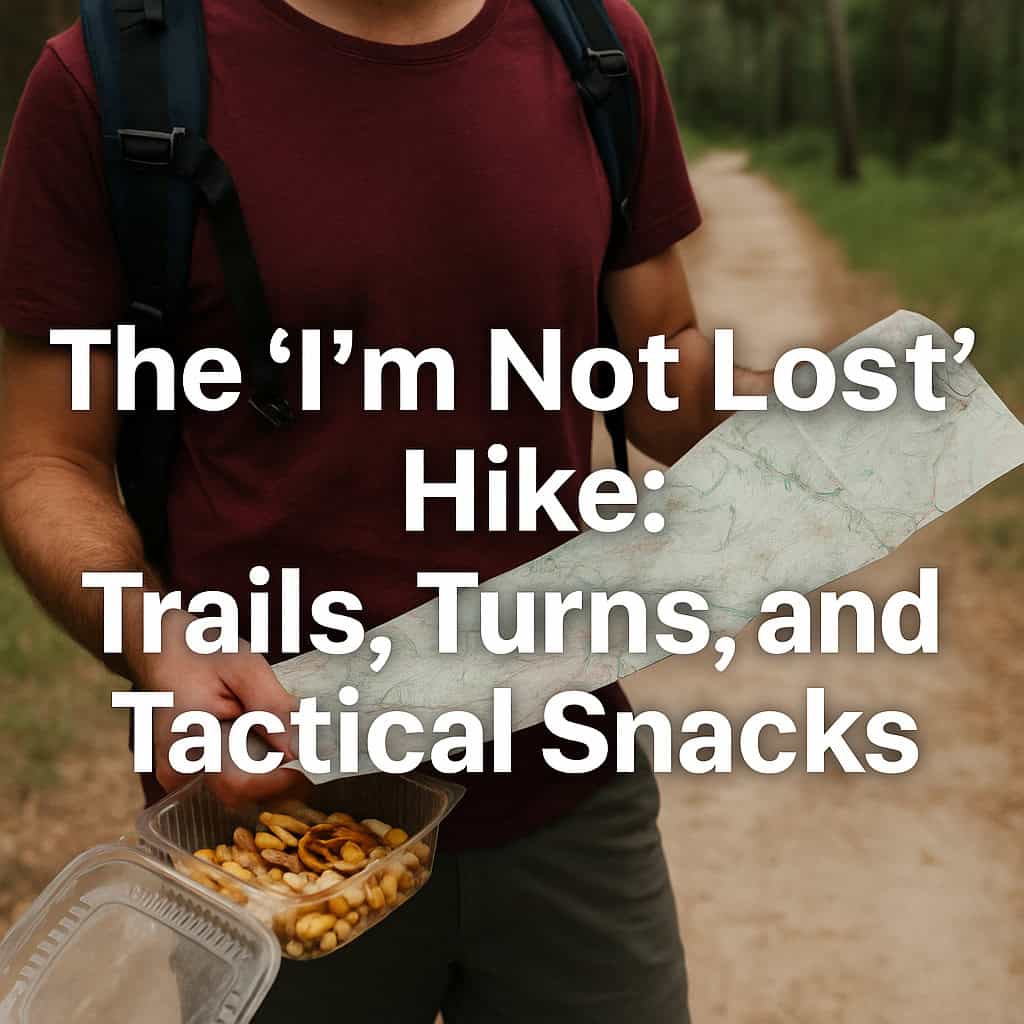
(Because you’re not lost—you’re just “temporarily off-course with vibes.”)
You set out for a quick loop.
Maybe two miles tops.
You’ve got water, good shoes, and the confidence of someone who definitely didn’t read the trail map at the kiosk.
An hour later?
You’re sweating. You’ve passed the same suspicious tree three times. And your granola bar is starting to look like a full meal.
Welcome to the “I’m Not Lost” hike—a rite of passage for campers who trust their sense of direction more than maybe they should.
Here’s how to navigate it all with grace, snacks, and as few emergency whistles as possible.
🧭 1. Read the Trail Map… For Real This Time
We all glance at it. We nod. We think we’ll remember. We won’t.
Before you go:
-
Take a photo of the trail map on your phone
-
Know the trail color or blaze symbol (red square? blue triangle? cryptic squirrel doodle?)
-
Check the elevation profile—because “loop” doesn’t mean “flat”
Pro tip: A lot of “easy” hikes turn spicy after the first bend. Prepare your thighs accordingly.
👣 2. Know the Trail Signs (Or Make Peace With Wandering)
Blazes are the breadcrumbs of the hiking world. Learn them:
-
Single mark: Keep going
-
Double mark = turn coming (usually, though not always, in the direction of the top mark)
-
No mark? Either you’re blazing a new trail… or you missed a turn two songs ago
When in doubt, backtrack. There’s no shame in U-turning for survival (or dignity).
🥤 3. Pack Snacks Like a Legend
Sure, it’s a “short hike”—until it isn’t.
Tactical snacks = mood boosters + survival calories.
Always bring:
-
Water (more than you think)
-
Salty snacks (pretzels, trail mix, jerky)
-
Sugar boost (fruit chews, chocolate, or a granola bar you’ll pretend is healthy)
-
Bonus points for gummy bears—they double as morale and breadcrumbs
Even if you don’t need them, sharing snacks on a trail makes you instantly popular. Hike friends > hangry silence.
📱 4. Tech Can Help… Until It Can’t
Phones are great—when there’s signal.
Apps like AllTrails, Gaia, or OnX can:
-
Help you stay on the path
-
Let you download offline maps (please do this)
-
Mark your start point so you can find your way back
BUT:
-
Batteries die
-
GPS glitches
-
Shady woods eat signals
Always have a rough mental map and keep track of major trail features (big rocks, bridges, the tree that looks like a moose, etc.).
😅 5. When You’re “Not Lost,” But Also Not… Found
Here’s your panic checklist:
-
Don’t keep guessing—retrace your steps to the last known point
-
Don’t bushwhack unless you want ticks and regret
-
Don’t split the group—stick together, even if you’re slow
-
Do conserve water and battery
-
Do keep spirits up—morale is a survival tool
And if you are actually lost, stop moving, stay visible, and let someone know before it gets dark. Better to call for help than be a cautionary tale on a campground board.
🐟 Want to Hike Trails That Match Your Vibe (and Skill Level)?
Use CampgroundViews to preview campground locations and nearby trails:
-
See how far the trailhead is from your site
-
Check topography (hello, unexpected cliffs)
-
Spot shady vs. exposed trails
-
Pick routes with actual views—not just trees and regret
Camp smarter, not sweatier.
💬 Final Thoughts
The “I’m Not Lost” hike is a classic camper experience.
It’s part scenic stroll, part accidental workout, part psychological thriller starring you.
But with a little prep and a lot of snacks, you can wander wisely—and still make it back in time for dinner.
And when you do find your way out? Just look at your crew and say:
“See? I told you it was a loop.”
🔗 Before your next hike:
Use CampgroundViews to scope the terrain, check nearby trails, and avoid the scenic detours that become survival stories.