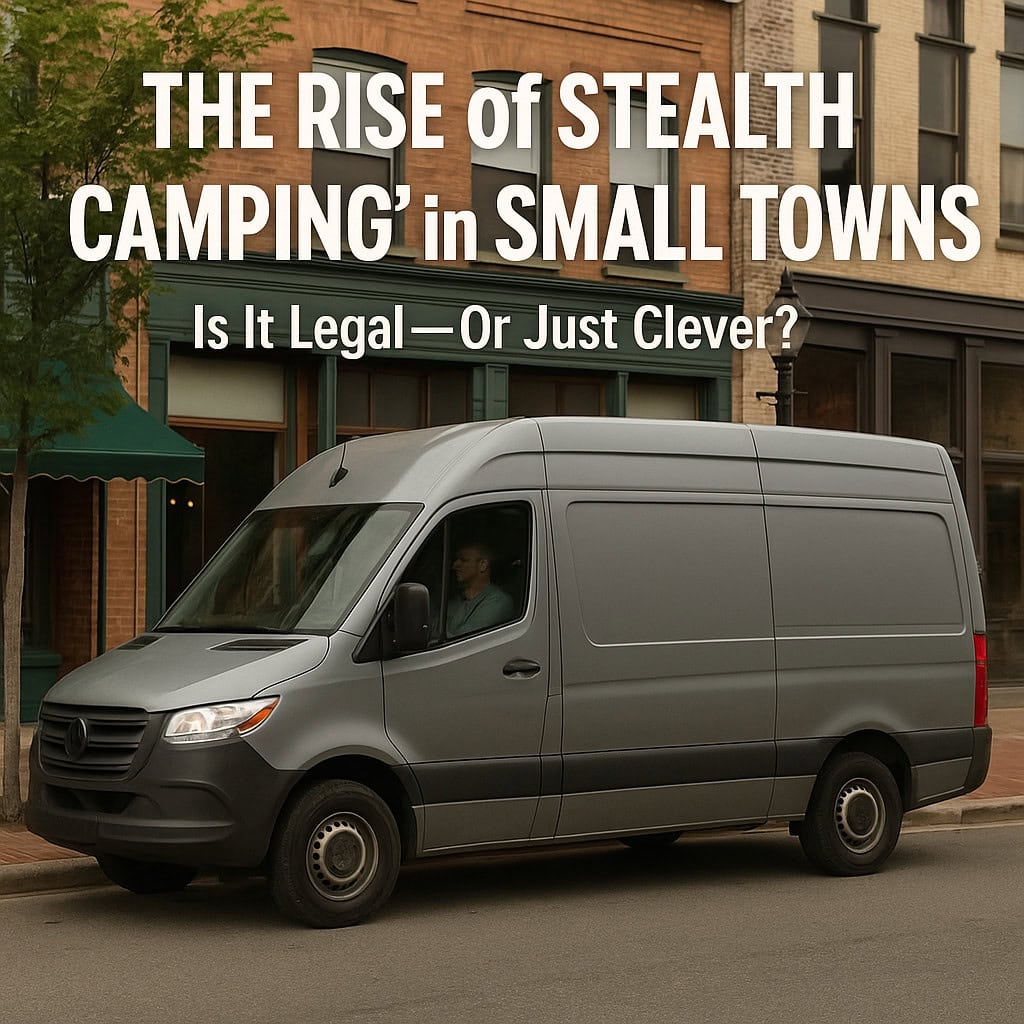
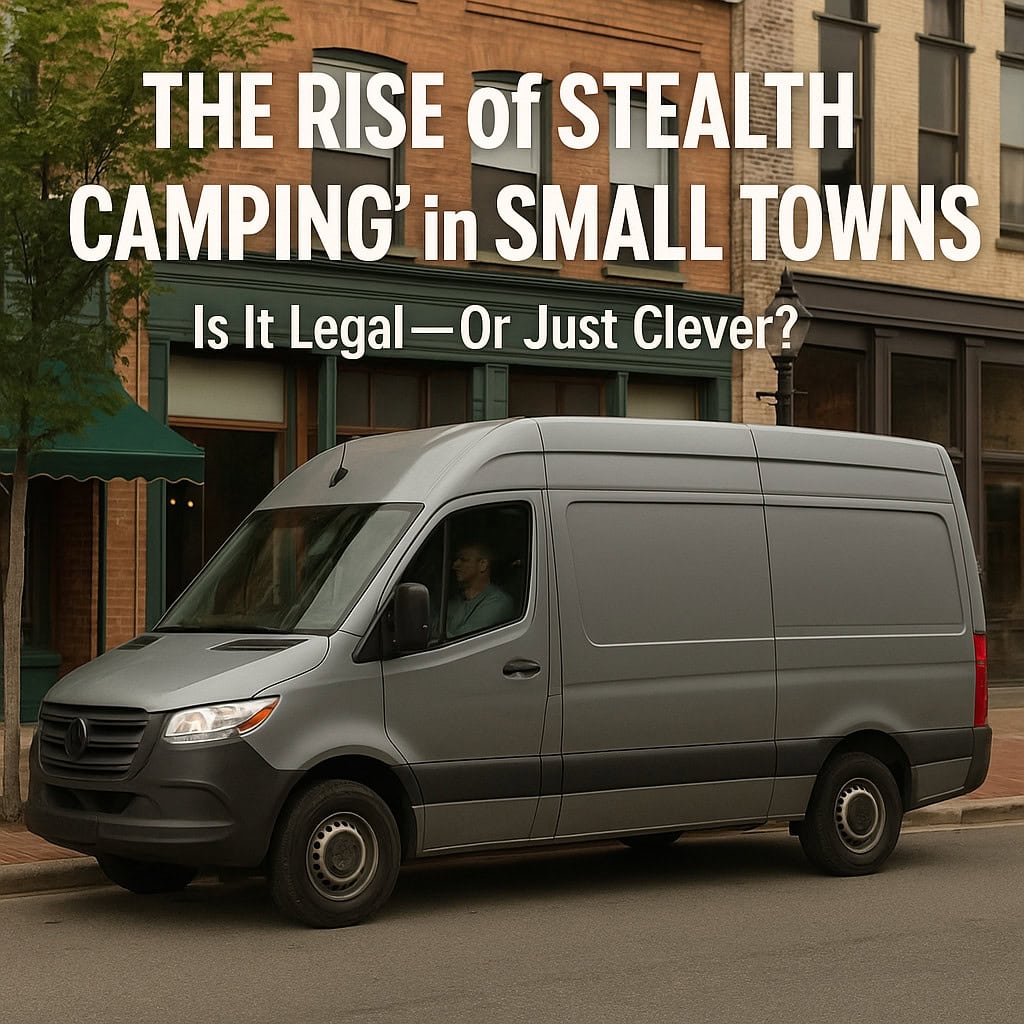
Is It Legal—or Just Clever?
You’ve probably seen it:
A plain white van parked near the town square.
No windows. No logos. No chairs outside.
It’s quiet. Clean. No sign of camping gear.
That’s stealth camping—and it’s becoming more common. Especially in small towns, where campgrounds fill up or don’t exist at all.
But is it legal? Or just sneaky?
Let’s dig in.
🕵️♂️ What Is Stealth Camping?
Stealth camping is when someone sleeps overnight in their vehicle without drawing attention.
That means no slide-outs, no leveling blocks, no lights blazing or lawn chairs out.
It’s usually done in:
-
Vans
-
SUVs
-
Truck campers
-
Class B RVs (or anything that looks like a normal vehicle)
And it’s often done in towns, not on forest roads or in designated campgrounds.
🤔 Why Do People Do It?
-
Avoid high campground fees
-
Camp in areas with no available sites
-
Stay close to work, appointments, or attractions
-
Keep a low profile and feel safer in town
-
Live full-time on the road without always “camping”
It’s also a growing trend among younger RVers, digital nomads, and van-lifers who value mobility over hookups.
⚖️ Is It Legal?
Here’s the tricky part:
It depends.
Many towns have laws against “overnight parking” or “sleeping in vehicles.”
Some strictly enforce it. Others look the other way.
And some places are actively updating ordinances in response to the stealth camping trend.
If there’s no posted rule? It might be legal.
If there’s a sign that says “No Overnight Parking”? It’s not worth the risk.
🚓 What Happens If You Get Caught?
Usually—not much.
In most cases, an officer might:
-
Tap on your window
-
Ask you to move
-
Issue a warning
But in strict cities, you could get a ticket or even towed.
Bottom line: You’re on their turf. If they say move, you move.
✅ Tips for Respectful Stealth Camping
-
Arrive late, leave early
-
Don’t set up chairs, awnings, or gear outside
-
Keep lights dim and noise low
-
Don’t dump tanks or trash—ever
-
Be respectful of neighborhoods and local businesses
Many stealth campers follow an unspoken code:
“Leave no trace, and leave no one annoyed.”
🧠 Best Places to Try (If You Do)
-
Large parking lots (with permission)
-
Industrial or warehouse zones
-
Near 24-hour businesses or gyms (with memberships)
-
On apps like iOverlander (check recent reviews!)
💬 Final Thoughts
Stealth camping isn’t illegal by default—but it’s not exactly invited, either.
Done right, it’s quiet, clean, and temporary.
Done wrong, it risks giving all campers a bad name.
So if you’re going to try it: be smart, be respectful, and know when it’s time to roll out.
🐟 Want a less sneaky way to camp?
Use Campground Views to preview legit campgrounds ahead of time—so you always know what to expect, and where to park without stress.