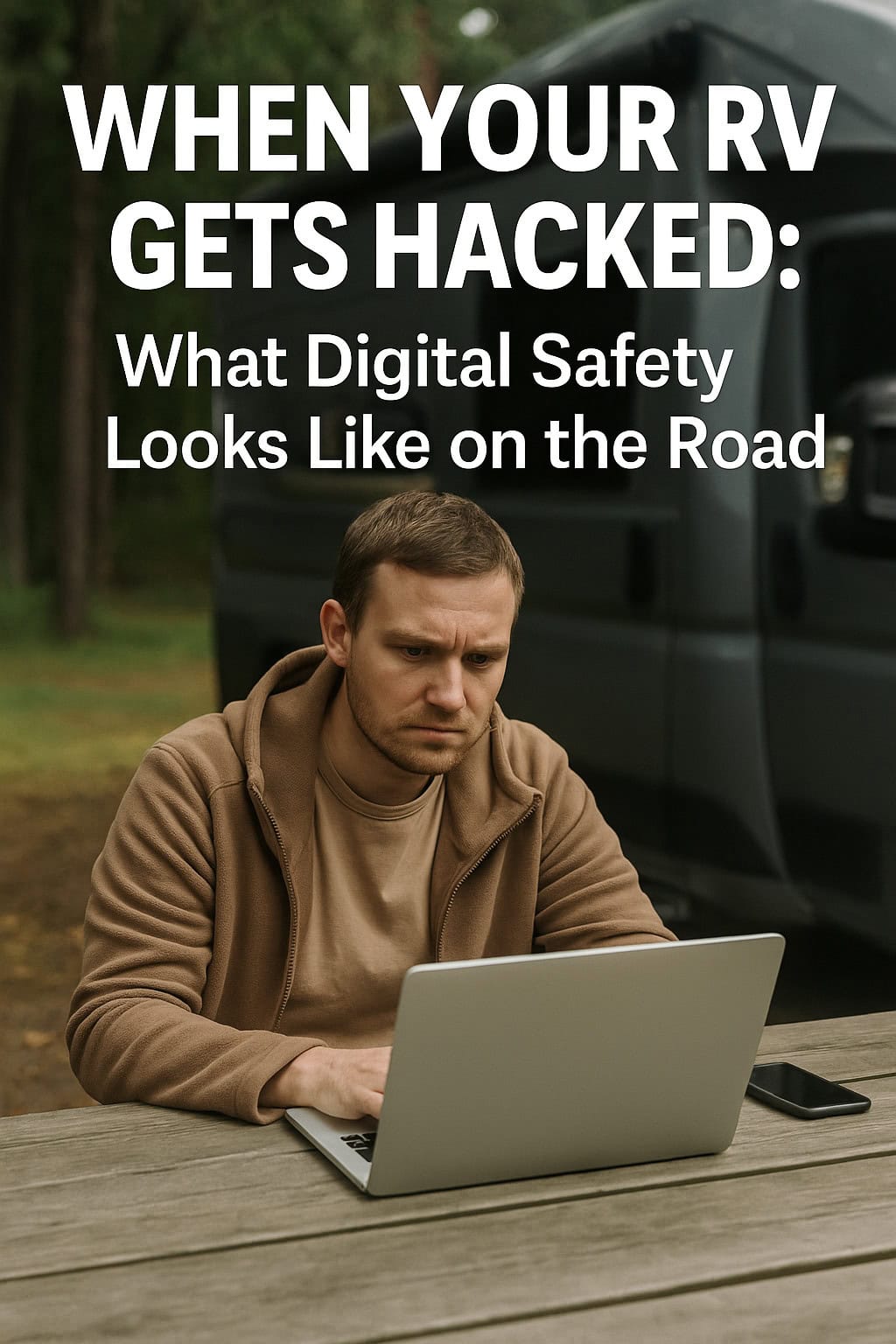
(Yes, even campers need cybersecurity now.)
You lock your doors.
You chain your bikes.
You check the hitch twice.
But have you ever thought about locking down your data?
RV life is getting smarter—with Wi-Fi routers, Bluetooth gadgets, GPS systems, smart TVs, and mobile hotspots. But that also means new risks.
And yes—RVs can be hacked.
🧠 Wait… How Can an RV Get Hacked?
Just like a home network, your RV’s devices connect to the internet. That includes:
-
Smart thermostats and tank monitors
-
RV-specific routers or signal boosters
-
Your phones and laptops on campground Wi-Fi
-
GPS or mobile apps tied to your location
If these aren’t protected, hackers can:
-
Steal personal info or credit card data
-
Track your location
-
Hijack your Wi-Fi signal
-
Or even disable certain systems remotely
💥 Real Risks on the Road
-
Using public Wi-Fi at campgrounds without encryption
-
Connecting to fake “free Wi-Fi” networks at rest stops
-
Buying secondhand RVs with old tech still connected to old accounts
-
Leaving routers and hotspots with default passwords
Most RVers aren’t thinking about this stuff—but hackers are counting on that.
✅ Digital Safety Tips for RVers
1. Use a Strong Hotspot or Router Password
Change the default. Make it unique. And don’t use your last name or “RVLife123.”
2. Avoid Public Wi-Fi for Banking or Shopping
Campground Wi-Fi is often unencrypted. If you wouldn’t do it at a coffee shop, don’t do it in a KOA either.
3. Get a VPN (Virtual Private Network)
This scrambles your data and hides your location. It’s a must if you work remotely or handle personal info online.
4. Update Your Devices Regularly
Your phone, GPS, and router all need updates. These often include important security fixes.
5. Turn Off Bluetooth When Not in Use
Leaving it open makes you an easy target for signal snatchers.
6. Reset Smart Devices If You Buy a Used RV
Clear out old connections and reprogram everything under your control.
🛠 Bonus Tools Worth Having
-
VPN app on your devices
-
Password manager
-
Two-factor authentication (2FA) on key accounts
-
Backup power for your Wi-Fi setup
-
Device tracking apps in case anything gets stolen
💬 Final Thoughts
Digital threats don’t stop at the campground gate.
The more connected your RV becomes, the more important it is to lock it down.
Cybersecurity isn’t just for offices and tech geeks—it’s for anyone who uses a phone in a camper.
🐟 Want to avoid sketchy campground networks altogether?
Use Campground Views to tour parks virtually, spot cell tower signals, and plan ahead for solid internet coverage—without relying on risky networks.
🔗 Follow us for real-world RV safety tips, smart tech habits, and modern travel strategies that actually work.
Because your next adventure shouldn’t come with a data breach.