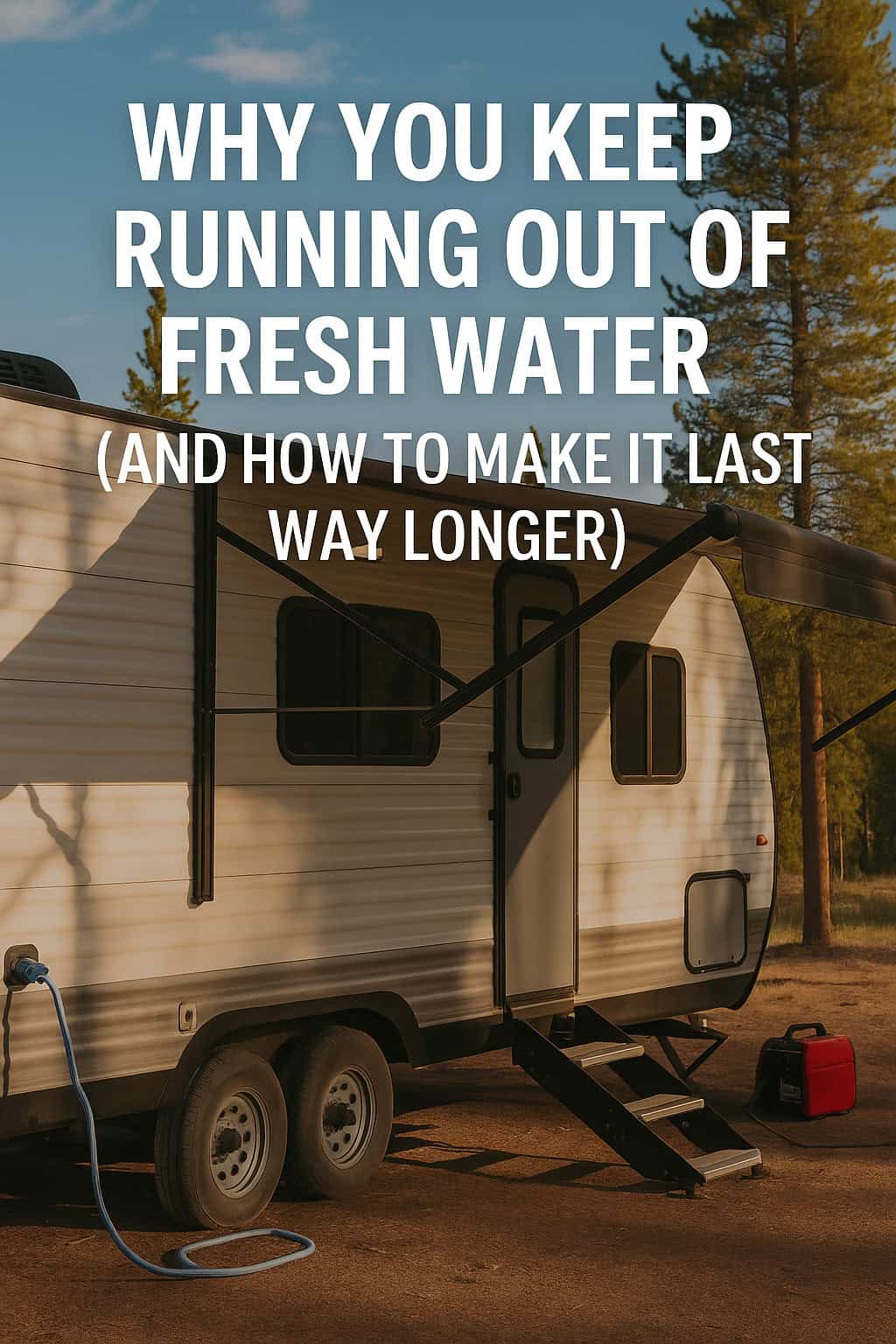
(Because nothing ruins a camp morning like a surprise cold sponge bath.)
You know the feeling.
You turn on the tap.
A sputter. A wheeze. Then—nothing.
No more fresh water. Again.
Now you’re rationing coffee water like you’re on a spaceship. Someone’s yelling from the shower. And the dog just drank the last of it.
Let’s fix that.
Here’s the down-to-earth guide to stretching your freshwater tank—plus smart camper tricks that’ll save you gallons (and headaches).
💧 The Quick Fix: Know Where It’s Going
Before you run out again, you need to know what’s actually draining your tank.
Most RVs have tanks that hold between 20 and 100 gallons. It sounds like a lot—until you flush, wash dishes, and rinse off your feet a few times.
Here’s a breakdown of where the water goes fast:
-
Toilets: 1–2 gallons per flush
-
Showers: Up to 5 gallons/minute (yes, minute)
-
Faucets: 2 gallons/minute
-
Leaky fittings? Drip by drip = tank killer
🚿 Step-by-Step: How to Make Your Fresh Water Last Longer
These aren’t fancy upgrades. Just easy, proven methods campers use every trip.
1. Turn Off the Tap While You Lather, Rinse, or Brush
This seems obvious—until you forget.
-
Turn off water while brushing teeth.
-
Wash hands with a splash, not a waterfall.
-
Use a rinse bucket for dishes instead of running water.
2. Use a Camp Shower Bag or Outdoor Rinse Station
Don’t touch your tank at all.
Fill a solar shower bag from a spigot or jug and rinse off outside.
Perfect after hikes, beach days, or muddy dog disasters.
3. Wipe Before You Wash
Use paper towels or a scraper to clean plates before you hit the sink. Less gunk = less rinse time.
4. Flush with Grey Water (If Allowed)
Some RVs let you re-route grey water to the toilet.
If not, consider:
-
Using campground restrooms.
-
Limiting flushes (if you can handle the “if it’s yellow…” method).
5. Use Refillable Jugs for Drinking & Cooking
Save the tank for washing and showers.
-
Bring 1–2 refillable 5-gallon jugs.
-
Keep one inside for cooking/drinking.
-
Refill at the camp spigot or store.
🔍 Bonus: Hidden Water Wasters (And How to Spot Them)
– Slow Leaks
Check under sinks, around pump fittings, and the water heater. A drip a second is a few gallons a day.
– Water Pump Cycling Randomly?
Could mean a pressure leak somewhere in your system.
– Hot Water Heater Drain Plug Loose
A loose plug can trickle out unnoticed. Tighten it up.
– Outdoor Shower Left On
Happens a lot. If the knobs are “off” but the sprayer head’s still open—it leaks constantly.
🧠 Advanced Tips for the Water-Savvy Camper
Want to really stretch things? Try these veteran tricks:
– Install a Low-Flow Shower Head
Like using 0.5 gallons a minute instead of 5. Huge difference.
– Get a Shut-Off Valve at the Shower Head
Turn water off between rinse and lather without turning knobs.
– Track Your Usage Daily
Fill a jug. Watch how much you use per day. You'll be amazed what habits eat the most.
– Fill Mid-Trip When Possible
Many gas stations, campgrounds, or rest areas have water fill stations—use ’em when you can.
🛑 Don’t Do This
-
Don’t assume your tank is full just because the gauge says so.
RV sensors are notorious liars. Always fill until water overflows the spout if you want full capacity. -
Don’t let the pump run dry.
It burns out fast and may pull air into your lines. If you're low—turn it off.
📦 Packing List: Water-Saving Tools That Are Worth It
(Again, not product reviews—just practical ideas.)
✔️ 5-gallon refillable jugs
✔️ Solar shower bag
✔️ Shut-off valve for showerhead
✔️ Scraper or rubber spatula (for dish cleaning)
✔️ Low-flow faucet/shower aerators
✔️ Quick-fill spout for campground faucets
✔️ Water bandit (lets you connect to odd-sized spigots)
✔️ Small bucket for catching dishwater or rinsing feet
🧼 What About Grey Water?
When you save fresh water, you also reduce how fast your grey tank fills. That’s a win-win.
Use biodegradable soap and reuse dish or hand rinse water when possible.
If you’re boondocking or dry camping:
✅ Always follow Leave No Trace rules.
❌ Never dump grey water on the ground unless it’s 100% legal and environmentally safe.
💬 Final Thoughts
Running out of water on day two of a five-day trip? That’s rough.
But it’s not a mystery—and it’s totally fixable.
By changing a few habits, carrying backup jugs, and being a little more intentional, you can stretch your tank days longer.
You don’t need fancy upgrades. Just some smart, road-tested tricks.
🧭 Want to Know If a Campground Has Reliable Water Hookups?
Use Campground Views to preview the campground setup—check for on-site spigots, dump stations, and how far your site is from the water source.
Because knowing what you’re rolling into saves more than water—it saves your whole weekend.
🔗 Follow us for more campsite tips, boondocking tricks, and gear-free solutions that actually work out on the road.
No fluff. Just smart fixes.