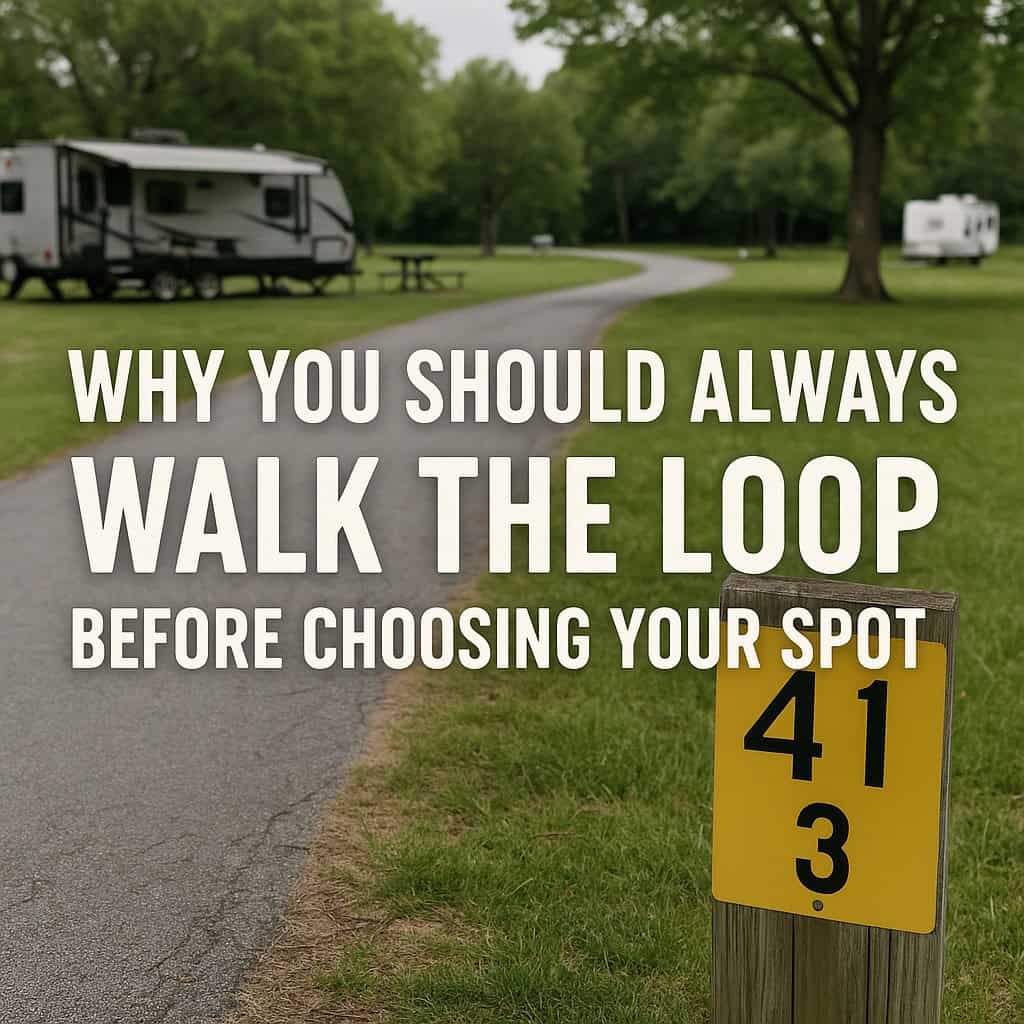
(Or: “How to Avoid the Tilted, Tree-Crushed, Trash-Adjacent Campsite From Regretville.”)
You pull into the campground with hope in your heart and Site #18 on your reservation.
It’s your name on the post. Your moment. Your fire pit fantasy.
Then you see it.
The slope.
The sewer cap under the picnic table.
The neighboring rig with a full light show and 42 lawn decorations.
And the tree that’s going to creak all night long.
Guess what? You should’ve walked the loop.
Even if you’ve got a reservation—even if the map looks good—a quick loop lap is the single smartest move you can make before setting up camp.
Here’s why.
👣 1. The Map Lies (Sometimes)
Online campground maps are helpful. But let’s not pretend they’re truth-tellers.
-
That “pull-through” might have a weird angle
-
The “shaded” site might be in full sun all day
-
The “level pad” might be a tilted slab with a generous crack in the middle
Walking the loop = reality check.
Photos can’t show puddles, mud ruts, or who brought their backup generator (and their backup for that backup).
🌲 2. Terrain Isn’t Just a Vibe—It’s Survival
From a distance, all campsites look the same.
Up close, they can be:
-
Slightly sloped (a.k.a. your fridge’s nemesis)
-
Root-riddled (tripping hazard and tent torture)
-
Flood-prone (enjoy sleeping in a puddle)
-
Right next to the dumpsters (aromatherapy? nope.)
A 3-minute walk could save you 3 hours of leveling frustration, ruined gear, or a raccoon staring contest at 2 AM.
🔇 3. You’ll Hear (and Smell) the Vibes
That peaceful site on the map? Might be next to:
-
A bustling playground
-
The camp’s only water spigot
-
The world’s loudest A/C unit
-
A “jam band enthusiast” who thinks quiet hours are optional
Your ears (and nose) know best.
Trust them before you commit to 48 hours next to someone’s pork shoulder smoker and Bluetooth speaker.
🪑 4. You Might Spot the Hidden Gem
The site you didn’t pick online might actually be:
-
More private
-
Better shaded
-
Closer to the bathhouse but not too close
-
Just plain prettier
Lots of campers are quick to settle. The ones who take a lap?
They get the secret best site. The shady spot. The quiet corner. The “how did you find this?” slice of campground heaven.
🧠 5. It Gives You Time to Plan Your Setup
Walking the loop lets you:
-
Check which way to face your rig
-
Spot trees that block slides or awnings
-
Choose a spot with better drainage (hello, rain paranoia)
-
See where the hookups are—and whether they make sense for your cord lengths
You’ll pull in once, park right, and start relaxing faster—with zero yelling about the power post being on the wrong side.
🐟 Want to Know Before You Even Step Out of the Rig?
Use CampgroundViews to virtually walk the loop before you even get there.
See:
-
Site layout and spacing
-
Shade, slope, and terrain
-
Where the bathhouse, dumpsters, and noise zones are
Because the best kind of walk-through is the one you can do from your couch—with coffee in hand and no ticks in your socks.
💬 Final Thoughts
You don’t need a clipboard or a compass.
Just take a stroll.
Scout. Listen. Breathe it in.
Then claim the campsite you actually want—not just the one the system gave you.
Your weekend (and your leveling blocks) will thank you.
🔗 Planning your next stay?
Check out CampgroundViews before you go—so your first walk around the loop is all about picking the perfect spot, not fixing someone else’s mistake.